
can you reline 100-inch pipe
One of the biggest questions infrastructure owners face is this. Can you reline a 100-inch pipe without digging up roads, disrupting communities, or shutting down critical systems? For many decades, traditional excavation and replacement were the default answers for large-diameter pipeline failures, especially when pipes were too big or too deep for easy access. But advances in trenchless rehabilitation have changed that.
Today’s technologies let companies like Advanced Pipe Repair restore even extra-large pipelines. This includes those up to 120 inches in diameter or more. And all without major disruption and with long-lasting structural performance.
Engineering Challenges of Very Large Diameters
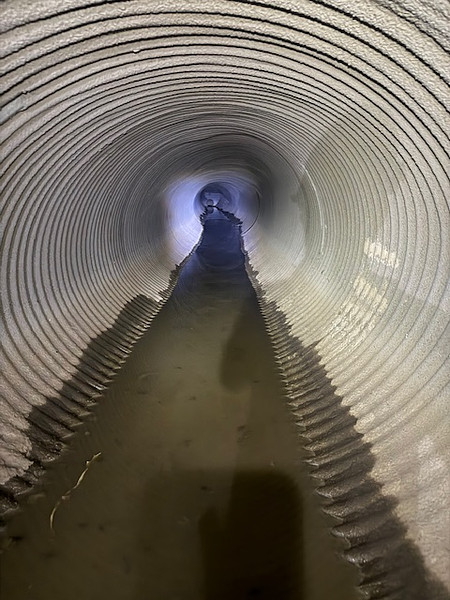
The physics of a pipeline change significantly as diameter increases. A 100-inch pipe is large enough for a person to walk through. And it is very different from a typical municipal sewer or industrial service line.
Key engineering hurdles include:
- Structural load demands: Larger pipelines must withstand not only internal flow pressures but also external soil loads, traffic loads, and potential hydrostatic pressures.
- Access limitations: Big pipes are often buried beneath roadways, utilities, and other infrastructure, making excavation costly, disruptive, and sometimes impractical.
- Flow interruption: Interrupting flow in high-capacity pipelines can be logistically complex, requiring bypass pumping or phased rehabilitation approaches.
These factors make conventional open-cut replacement expensive and time-consuming. That’s where trenchless technologies provide game-changing alternatives.
Equipment, Access, and Installation Methods
For extra-large diameter relining work, the process begins with highly detailed inspection and planning. Advanced Pipe Repair utilizes state-of-the-art robotic cameras and lateral inspection systems that can navigate pipes up to 120 inches wide, providing clear, high-resolution imagery of the interior condition before any rehabilitation work begins.
Once inspection is complete, preparation is key. Cleaning the pipe interior — often through hydro-jetting or mechanical descaling — ensures that lining materials can bond effectively to the host pipe wall.
The primary installation methods for large-diameter pipelines include:
- Cured-in-Place Pipe (CIPP): A flexible, resin-impregnated liner is inverted or pulled into the existing pipe. Once in place, heat, steam, or UV light cures the resin into a seamless, structural pipe within a pipe. This approach is highly effective for pipes up to and beyond 100 inches in diameter.
- Spray-in-Place Pipe Repair (SIPP): Cementitious or polymer coatings are spray-applied to the interior surface of the pipe. This technique restores structural integrity and corrosion resistance without adding a discrete carrier pipe.
Both methods require careful sizing, flow management, and curing control to ensure that the relined pipeline meets structural and performance expectations.
Cementitious vs. Hybrid Structural Solutions
When relining large-diameter pipelines, the choice of materials impacts long-term durability, strength, and performance.
Cementitious Linings
Cementitious linings use mortar-based, high-strength materials applied as a structural repair layer. These linings:
- Restore lost wall thickness
- Provide excellent resistance to corrosion and abrasion
- Are often specified for stormwater, wastewater, and industrial applications where chemical exposure is a concern
This solution effectively rebuilds the pipeline’s structural capacity while creating a smooth interior surface.
Hybrid and CIPP Solutions
CIPP systems, by contrast, rely on resin-saturated liners that cure into place to form a new, jointless pipeline. Advantages of CIPP include:
- Seamless internal surfaces that reduce friction and improve flow
- Structural strength that, in many cases, matches or exceeds the original pipe
- Minimally invasive installation with reduced community disruption
Hybrid solutions may combine aspects of cementitious and CIPP materials to provide tailored performance characteristics depending on project requirements and site conditions.
Safety and Confined-Space Considerations
Working inside very large diameter pipelines presents unique safety challenges. Even though pipes up to 100 inches and beyond are physically accessible, they remain confined, underground spaces with limited ventilation, potential gas hazards, and complex access logistics.
Advanced Pipe Repair follows rigorous safety protocols, which include:
- OSHA-compliant confined-space entry procedures
- Atmospheric air monitoring and ventilation systems
- Trained personnel with specialized safety certifications
- Emergency response planning and communication systems
Safety planning is integrated into every project from inspection through installation, with continuous monitoring to protect crews and infrastructure.
Real Project Examples
In one recent example, Advanced Pipe Repair rehabilitated a 96-inch stormwater main running beneath a busy roadway. Traditional excavation would have required extensive road closures and weeks of pavement restoration. Instead, the team:
- Conducted a robotic inspection to assess existing conditions
- Cleaned the interior to remove debris and corrosion
- Installed a CIPP liner tailored to the pipe’s dimensions
- Cured the liner and reinstated flow
The finished pipeline regained full structural capacity, increased flow efficiency due to a smoother interior, and was completed in a fraction of the time and cost of open-cut replacement.
This example highlights how trenchless rehabilitation, even for extremely large pipelines, can be a cost-effective and practical alternative to digging up critical infrastructure.
Can You Reline 100-Inch Pipe? We Can!
With the right technology, expert planning, and advanced trenchless methods like CIPP and SIPP, large diameter pipelines can be rehabilitated from within without major surface disruption or costly excavation.
At Advanced Pipe Repair, we specialize in handling extra-large diameter projects, combining robotic inspection, precision engineering, and structural rehabilitation materials to deliver long-lasting, durable results across municipal, industrial, and commercial infrastructure. Contact us today to learn more or discuss your project needs.