
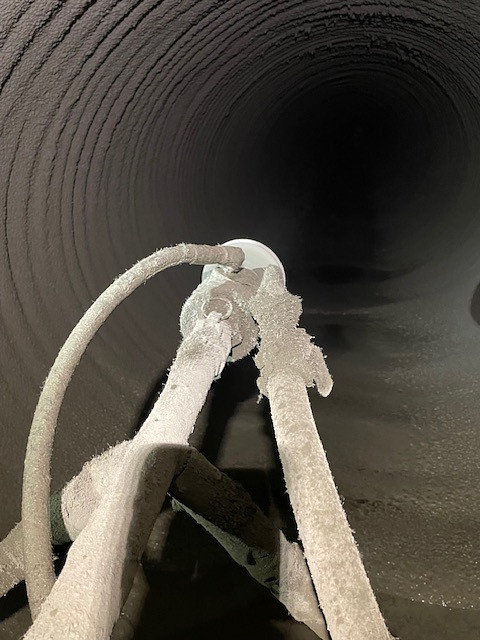
Understanding a cement mortar lining lifespan is essential for engineers, asset managers, and municipal decision-makers responsible for aging infrastructure. Cement mortar lining has been used for decades to rehabilitate steel and cast iron pipelines, restore hydraulic capacity, and protect pipe walls from corrosion.
While the method has a long track record, longevity depends on several variables. This includes installation quality, operating conditions, and ongoing maintenance. Our guide breaks down what engineers need to know about how long cement mortar lining lasts and how to maximize its service life.
Expected Cement Mortar Lining Lifespan and Warranty Data
When properly designed and installed, cement mortar lining is widely recognized as a long-lasting internal pipe rehabilitation solution. Industry studies and field performance data commonly show service lives ranging from 50 to 75 years. Many lined pipelines still perform well beyond initial expectations.
Key factors influencing expected lifespan include:
- Quality of surface preparation before lining
- Proper mix design and application thickness
- Adequate curing time and environmental control
- Compliance with applicable AWWA and ASTM standards
Warranty terms for cement mortar lining projects are typically shorter than the expected service life. They often ranging from 1 to 5 years, depending on the project scope and owner requirements. These warranties primarily cover workmanship and material defects, rather than long-term operational conditions.
Environmental and Flow Factors Affecting Longevity
While cementitious lining is durable, its performance is influenced by the environment in which it operates. Engineers should evaluate site-specific conditions during design and specification.
Important environmental and hydraulic considerations include:
- Water chemistry: Low pH, high sulfate levels, or aggressive water can accelerate degradation
- Flow velocity: Excessive velocities may increase abrasion over time
- Temperature fluctuations: Extreme or repeated temperature changes can stress the lining
- Pipe material condition: Severe pre-existing corrosion or wall loss may reduce long-term effectiveness
In potable water systems, cement mortar lining generally performs exceptionally well due to stable water chemistry. In wastewater or industrial applications, additional evaluation may be required to ensure compatibility with conveyed media.
Maintenance and Re-Inspection Intervals
One of the advantages of cement mortar lining is its relatively low maintenance requirement. However, “low maintenance” does not mean “no maintenance.” Regular monitoring helps ensure small issues do not evolve into larger failures.
Recommended inspection and maintenance practices include:
- Initial post-installation inspection to confirm curing and adhesion
- Periodic visual or CCTV inspections every 10–15 years
- Hydraulic testing if flow capacity changes are suspected
- Water quality monitoring in systems with aggressive chemistry
Proactive inspection allows asset owners to plan future rehabilitation or spot repairs well before structural integrity is compromised.
In many systems, documentation and recordkeeping also play a role in long-term performance. Maintaining detailed records helps engineers track performance trends over time. This historical data supports better forecasting, simplifies future rehabilitation planning, and allows design teams to make more accurate lifespan assumptions when similar pipe segments are evaluated later.
Common Failure and Prevention
Although cement mortar lining has an excellent performance record, failures can occur when conditions exceed design assumptions or best practices are not followed.
Common causes of premature failure include:
- Inadequate surface cleaning or poor bond to the host pipe
- Improper curing due to insufficient moisture or temperature control
- Exposure to highly acidic or chemically aggressive flows
- Mechanical damage from debris, tools, or subsequent construction
Preventive measures that extend lining life include thorough pre-lining inspections, strict quality control during application, and clear operational guidelines for post-installation use.
Comparison with Other Lining Materials
Engineers often evaluate cement mortar lining alongside other internal rehabilitation options. Each material has advantages, depending on system needs and performance requirements.
A high-level comparison includes:
- Cement mortar lining: Long history, excellent corrosion protection, cost-effective for large-diameter pipes
- Epoxy linings: Smooth hydraulic surface, faster curing, shorter expected lifespan in some applications
- CIPP liners: Structural renewal, suitable for severely deteriorated pipes, higher installation cost
Cement mortar lining remains a preferred choice when the host pipe retains adequate structural capacity and long-term corrosion protection is the primary goal.
What Longevity Means for Asset Planning
From an asset management perspective, cement mortar lining offers predictable performance and long-term value. Its lifespan aligns well with multi-decade capital improvement planning, allowing municipalities and utilities to defer costly pipe replacement while maintaining system reliability.
When properly specified and maintained, cement mortar lining supports:
- Extended asset life without full replacement
- Improved hydraulic performance
- Reduced long-term maintenance costs
- Consistent regulatory compliance
Planning for Cement Mortar Lining Lifespan Performance
For engineers evaluating rehabilitation strategies, understanding the potential lifespan of these materials is critical to making informed, defensible decisions. When installed under the right conditions and supported by periodic inspection, cement lining can provide decades of reliable service.
When we help clients assess existing pipelines, select appropriate lining methods, and implement long-term maintenance strategies, our goal is to deliver durable solutions that support infrastructure performance well into the future.
If you’re planning a lining project or need expert input on extending pipe service life, Advanced Pipe Repair is ready to help. Contact us today to learn more.