
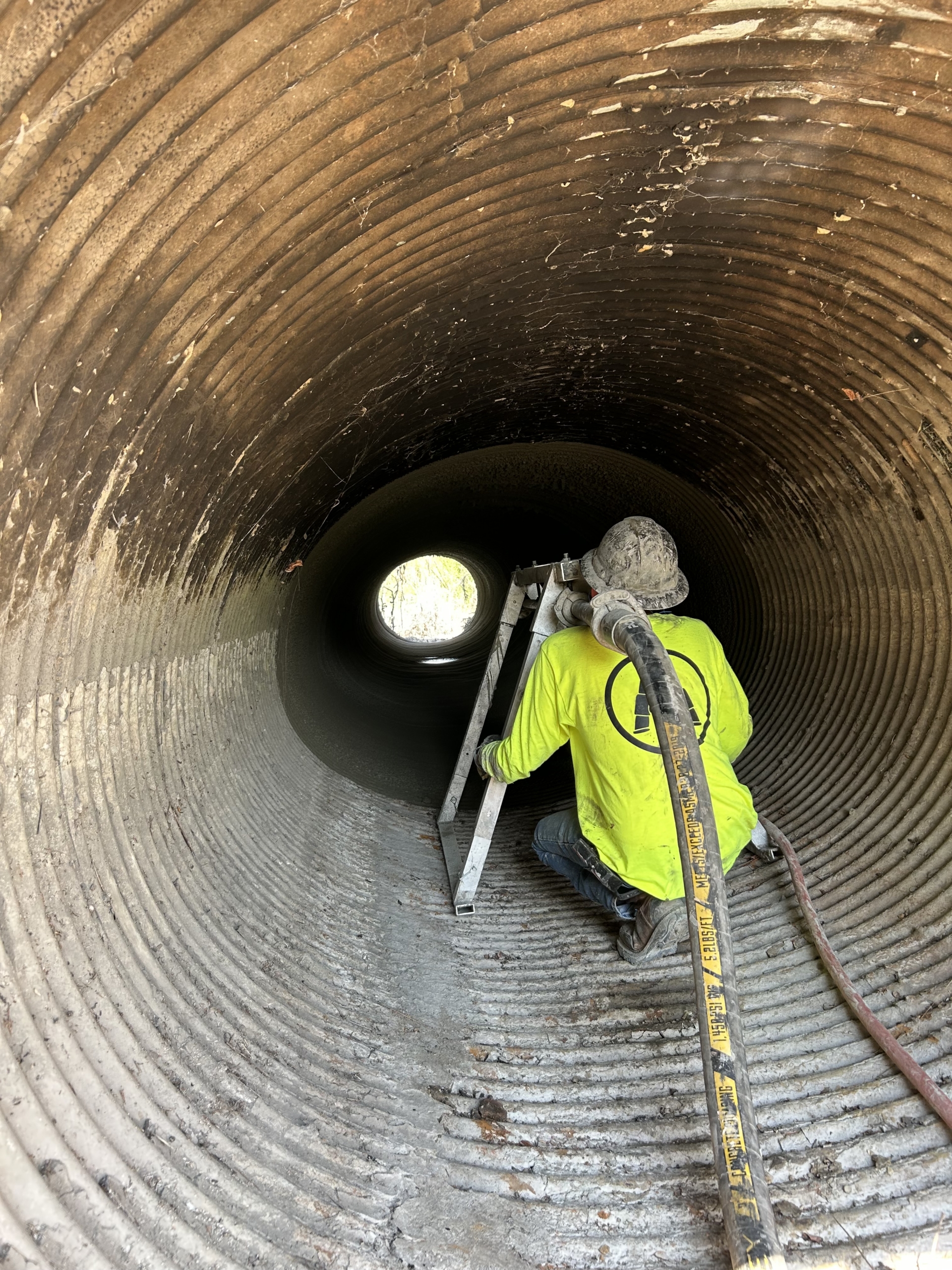
large-diameter trenchless projects
Successful large-diameter trenchless projects begin long before crews mobilize or liner materials arrive. Municipal engineers, public works directors, facility managers, consultants, and utility contractors must first establish the condition of the existing pipeline, define performance requirements, identify site constraints, and develop measurable acceptance criteria.
Large-diameter pipeline rehabilitation carries substantial operational and financial risk. A design that overlooks active flow, structural deterioration, access limitations, or service connections can lead to schedule delays, change orders, installation problems, and premature failure. Careful trenchless construction planning helps project teams select an appropriate rehabilitation method while protecting critical infrastructure and nearby operations.
Every Projects Starts with a Complete Pipeline Investigation
A pipe’s diameter and length do not provide enough information to complete a trenchless project design. The design team needs reliable data about the host pipe, surrounding soil, hydraulic demands, defects, and previous repairs.
A detailed investigation may include:
- Closed-circuit television inspection
- Laser or sonar profiling
- Pipe cleaning and debris removal
- Manhole and access-point surveys
- Material sampling or laboratory testing
- Groundwater evaluation
- Flow monitoring
- Review of original plans and repair records
- Identification of laterals, taps, bends, and diameter changes
Inspection records should document corrosion, cracking, joint displacement, deformation, infiltration, root intrusion, sediment, exposed reinforcement, and missing pipe sections. For pipelines that remain partially submerged, sonar can help identify defects below the waterline that conventional video may not capture clearly.
Cleaning often reveals conditions that were hidden during the initial inspection. For that reason, the final design may need a post-cleaning verification step before liner manufacturing or installation begins.
Define the Required Structural Performance
Pipeline rehabilitation design must distinguish between a liner intended to control infiltration and one expected to function as a fully structural replacement pipe. This decision affects liner thickness, material selection, curing requirements, and long-term performance.
The design team should evaluate:
- Host-pipe material and remaining structural capacity
- Pipe ovality and deformation
- Soil and groundwater loads
- Live loads from roads, railways, or industrial traffic
- Installation depth
- Internal pressure, if applicable
- Expected service life
- Chemical and temperature exposure
- Safety factors required by the owner or governing standard
A partially deteriorated design may assume that the host pipe retains some structural capacity. A fully deteriorated design generally requires the rehabilitated pipe to resist external loads independently. That distinction must rest on inspection data and engineering analysis, not assumptions based on pipe age alone.
Project documents should also identify the applicable ASTM standards, material requirements, testing procedures, and owner specifications. The engineer of record must confirm which criteria apply to the pipe, installation method, and operating environment.
Account for Hydraulic Capacity
Large-diameter pipeline engineering requires more than structural calculations. Adding a liner reduces the inside diameter of the existing pipe. Although a smooth liner surface may improve flow characteristics, the design team must verify the finished system’s hydraulic performance.
Hydraulic analysis should consider:
- Existing and projected peak flow
- Minimum and maximum operating velocity
- Changes in internal diameter
- Finished liner roughness
- Upstream and downstream restrictions
- Sags, deposits, or deformation
- Wet-weather infiltration
- Future development or process expansion
- Required emergency capacity
This evaluation becomes especially important during municipal sewer rehabilitation and stormwater pipe rehabilitation. A liner that meets structural requirements still cannot compromise the system’s ability to manage peak sanitary flows or storm events.
Industrial systems may introduce additional concerns, including process discharge temperatures, chemical compatibility, solids loading, and shutdown restrictions. These conditions should be documented before selecting a resin, coating, or lining system.
Select the Rehabilitation Method Based on Conditions
No single trenchless pipe repair process fits every large-diameter pipe. Cured-in-place pipe may provide a continuous structural liner through an existing pipeline, while other conditions may call for spray-applied coatings, sectional repairs, sliplining, or conventional replacement.
Method selection should account for:
- Pipe diameter and shape
- Structural condition
- Available access
- Number of bends and transitions
- Active infiltration
- Required liner thickness
- Service connections
- Chemical exposure
- Allowable shutdown duration
- Required cure or return-to-service time
- Space available for staging equipment
Design considerations for trenchless pipeline rehabilitation should also address what happens if field conditions differ from the investigation. Bid documents can define decision points for localized repairs, obstruction removal, groundwater control, or limited excavation if crews encounter a collapsed section.
A clear contingency plan helps owners compare bids fairly and reduces disputes once work begins.
Plan Access, Staging, and Material Handling
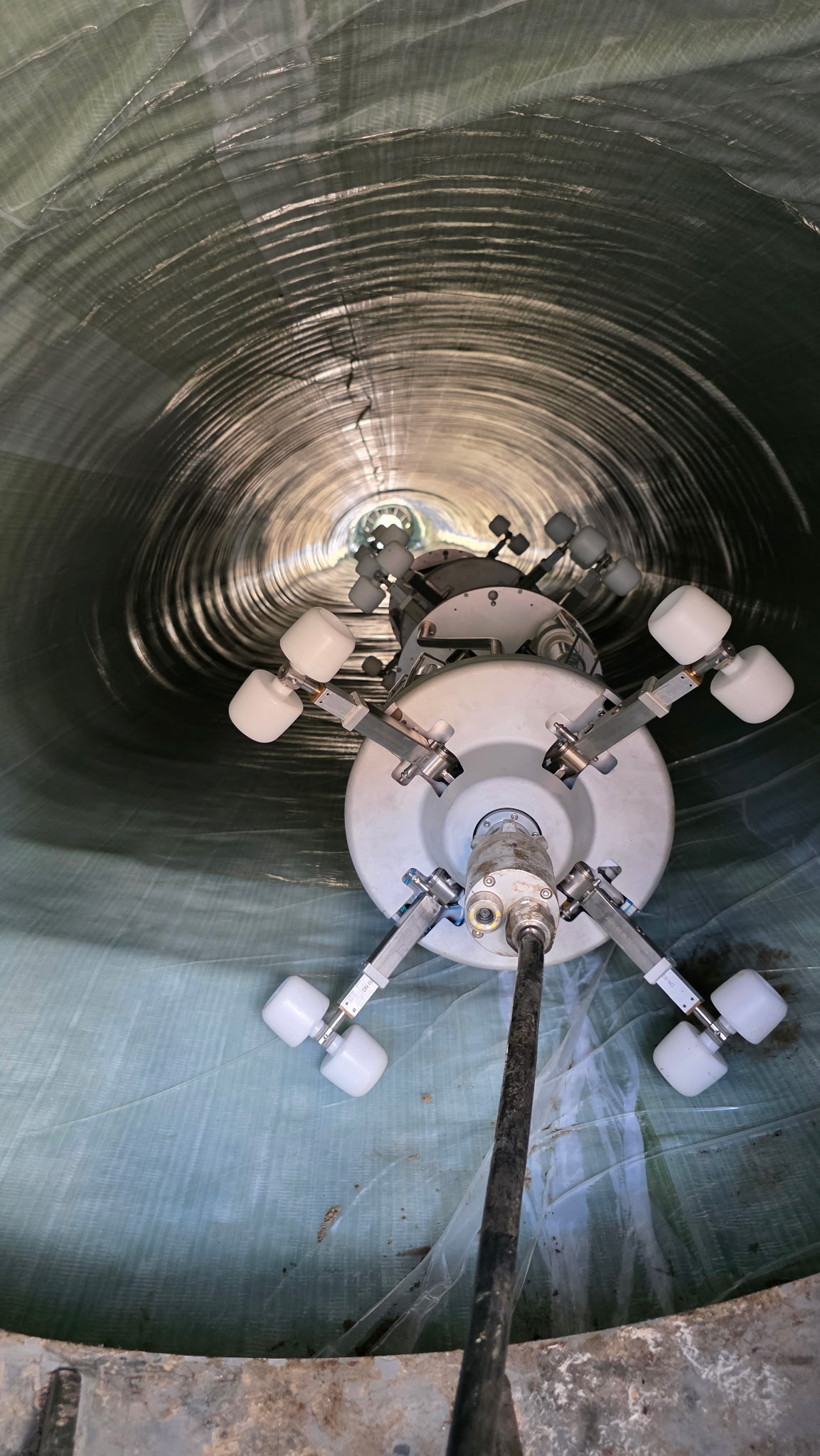
Large-diameter liners, hoses, pumps, boilers, generators, and cleaning equipment require substantial staging space. Access points that accommodate inspection equipment may not be large enough for liner installation.
Teams should evaluate:
- Manhole dimensions and condition
- Excavation requirements for insertion access
- Liner length and weight
- Crane or lifting requirements
- Equipment placement
- Traffic and pedestrian control
- Overhead and underground conflicts
- Material storage conditions
- Access for emergency vehicles
- Restoration requirements
Commercial properties and industrial facilities may need continuous access for employees, deliveries, tenants, or production vehicles. Municipal projects may require lane closures, detours, noise controls, and coordination with other utilities.
Trenchless methods can reduce surface excavation, but they do not eliminate site logistics. The design should show where equipment will operate and how crews will protect adjacent structures, pavement, landscaping, and active facilities.
Develop a Flow Control and Bypass Plan
Many large sanitary, stormwater, and industrial pipelines cannot simply be taken out of service. The project may require bypass pumping, temporary diversion, flow isolation, or work during a controlled shutdown.
The flow-control plan should identify:
- Normal and peak flow rates
- Pumping capacity and redundancy
- Suction and discharge locations
- Temporary piping routes
- Backup power requirements
- Alarm and monitoring procedures
- Spill and overflow response
- Weather limitations
- Staffing requirements
- Maximum allowable shutdown duration
Bypass systems should provide enough capacity for expected conditions plus an appropriate margin established by the project engineer. Critical systems may require standby pumps, generators, fuel supplies, and continuous monitoring.
For stormwater infrastructure rehabilitation, weather forecasting and seasonal restrictions may control the work window. Industrial facilities may need to coordinate installation with planned outages or temporary process changes.
Address Laterals, Connections, and Appurtenances
Service connections and internal features can complicate civil infrastructure repair. The design team must identify how crews will locate and reinstate active laterals after lining.
Project records should address:
- Number and location of service connections
- Connection diameter and orientation
- Active versus abandoned laterals
- Protruding taps
- Internal drops or cleanouts
- Valves and access structures
- Diameter transitions
- Bends and changes in alignment
Unmapped connections create risk for both the owner and contractor. Preconstruction verification can reduce the chance of overlooking an active service or reopening the wrong location.
The specifications should define the required reinstatement method and acceptance criteria. They should also establish how crews will document each connection before and after rehabilitation.
Specify Material Handling and Installation Controls
CIPP and other lining systems depend on controlled field execution. Resin storage, wet-out, liner transport, installation pressure, cure temperature, and cooling procedures can affect the finished product.
A trenchless rehabilitation planning guide should require documentation appropriate to the selected method, such as:
- Manufacturer and material certifications
- Resin batch information
- Liner thickness and dimensions
- Storage and transport conditions
- Installation pressure records
- Cure temperature logs
- Water or steam circulation records
- Calibration records for monitoring equipment
- Installer qualifications
- Deviations from the approved installation plan
For thermoset liners, the project team should define how temperature sensors will confirm that the liner has reached the required cure conditions. The specifications should also address cool-down procedures because uncontrolled cooling can affect the installed liner.
Establish Quality Assurance and Acceptance Criteria
Inspection and testing requirements must be written before bidding. Vague language such as “install according to manufacturer recommendations” may not provide enough information for consistent pricing or objective acceptance.
A strong quality plan identifies responsibilities and deliverables at each stage:
| Project Stage | Typical Verification |
|---|---|
| Before installation | Cleaning records, inspection video, dimensions, access confirmation |
| During installation | Material records, pressure data, temperature logs, field observations |
| After installation | CCTV inspection, connection verification, samples or testing |
| Closeout | Final videos, test reports, repair records, warranties, as-built documentation |
The engineer should define how the project team will address wrinkles, fins, discoloration, incomplete cure, restricted connections, infiltration, or other observed conditions. Acceptance criteria should reflect the governing standards and the operational needs of the owner.
Build Procurement Documents Around Measurable Risk
Procurement managers need scopes that allow qualified contractors to price the same work. Bid packages should clearly identify pipe dimensions, access conditions, known defects, bypass responsibilities, testing requirements, restoration limits, work-hour restrictions, and closeout documentation.
Owners may also evaluate:
- Experience with comparable diameters and conditions
- Installer training and certifications
- Proposed materials and manufacturers
- Quality-control procedures
- Bypass pumping experience
- Safety record
- References for similar infrastructure rehabilitation
- Warranty terms
- Response plans for installation problems
The lowest initial bid does not always represent the lowest lifecycle cost. A defensible evaluation considers technical compliance, installation risk, expected longevity, inspection requirements, and the contractor’s ability to complete the work without disrupting essential operations.
Coordinate the Design Before Construction Begins
Engineering large-diameter trenchless projects requires coordination among owners, consultants, operators, contractors, inspectors, and affected property managers. A preconstruction meeting should confirm access, sequencing, bypass procedures, safety responsibilities, submittals, inspection hold points, emergency contacts, and communication protocols.
Advanced Pipe Repair brings field experience to commercial, municipal, government, and industrial pipeline rehabilitation. Our team can support condition assessment, cleaning, video inspection, CIPP installation, vertical pipeline rehabilitation, and other non-invasive pipe repair needs based on documented system conditions.
Successful large-diameter trenchless projects depend on accurate investigation, appropriate engineering, clear specifications, controlled installation, and verifiable quality records. Contact Advanced Pipe Repair to discuss your pipeline conditions, project constraints, and rehabilitation objectives before finalizing the scope of work.