
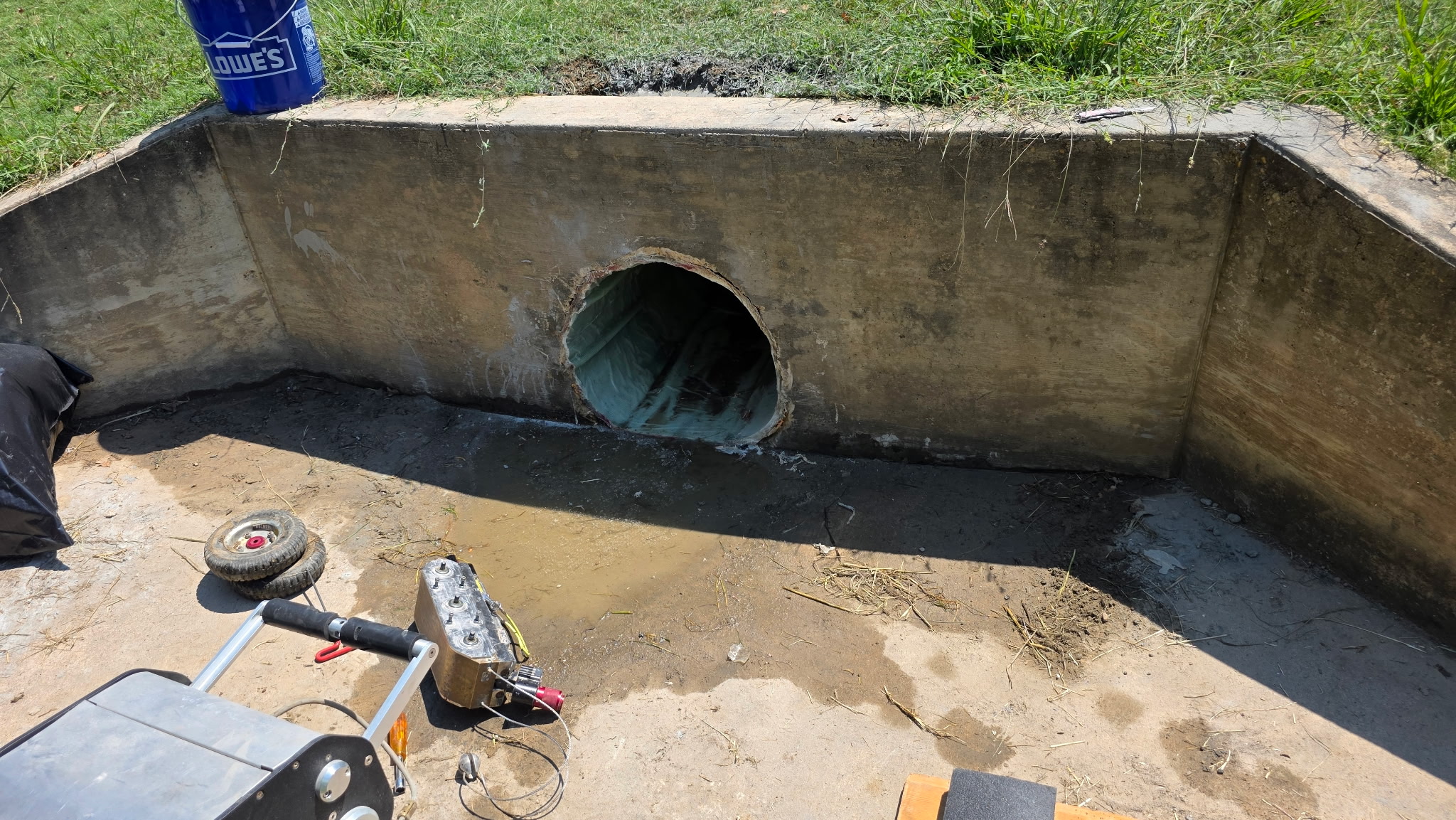
The environmental benefits of trenchless pipe rehabilitation start with a basic change in project strategy: restoring an existing pipeline instead of removing it and building a replacement from the ground up. For municipalities, industrial facilities and commercial properties, that difference can reduce excavation, material consumption, hauling, traffic disruption, and site restoration.
At Advanced Pipe Repair, we evaluate each pipeline before recommending a rehabilitation method. A trenchless approach is not automatically the right solution for every asset, but when the existing pipe is a suitable host, rehabilitation can support both infrastructure performance and environmental objectives.
Understanding the Environmental Cost of Pipe Work
The environmental impact of a pipeline project extends beyond the pipe material itself. Open-cut replacement may require pavement removal, excavation, trench stabilization, dewatering, soil hauling, imported backfill, new pipe installation, and reconstruction of the disturbed surface. Each activity uses equipment, labor, fuel, and materials. The project may also affect traffic, nearby businesses, landscaping, waterways, and daily facility operations.
A complete evaluation should consider:
- Amount of soil and pavement disturbed
- Volume of material removed from the site
- Quantity of imported backfill and aggregate
- Heavy-equipment operating hours
- Truck trips for hauling and material delivery
- Traffic-control requirements
- Bypass pumping needs
- Water and energy used during installation
- Waste generated by the selected method
- Expected service life of the completed system
- Future maintenance and rehabilitation requirements
This broader view gives asset owners a more realistic understanding of sustainable pipe repair than a simple comparison of liner material versus replacement pipe.
Top Environmental Benefits of Trenchless Pipe Rehabilitation
Trenchless methods use the existing pipeline as the installation pathway or host structure. Depending on pipe condition and project design, access may be limited to existing manholes, cleanouts, or strategically selected entry points.
Reducing excavation can produce several related advantages:
- Less disturbance to soil and established surfaces
- Fewer demolition and reconstruction materials
- Lower demand for imported fill
- Reduced hauling and truck traffic
- Less disruption to vegetation and landscaped areas
- Shorter periods of traffic control
- Fewer open trenches and associated site risks
- Reduced interference with nearby infrastructure
The scale of these benefits depends on pipe diameter, depth, length, access, location, and rehabilitation method. Decision-makers should require project-specific calculations rather than assuming the same reduction will apply to every installation.
How Trenchless Pipe Repair Reduces Environmental Impact
The most visible difference is the reduction in surface disturbance. A conventional replacement project may require a continuous trench along the pipeline alignment. Rehabilitation generally reaches the damaged pipe through limited access points.
This distinction matters when pipelines run beneath:
- Streets and intersections
- Parking lots
- Rail corridors
- Manufacturing floors
- Hospitals and institutional buildings
- Environmentally sensitive areas
- Mature landscaping
- Sidewalks and public spaces
- Active commercial properties
Avoiding a continuous trench preserves more of the existing site. Pavement, concrete, landscaping and other improvements can often remain in place, reducing both demolition waste and the need for replacement materials. Less excavation also lowers the likelihood of encountering unrelated utilities, although utility locating, cross-bore evaluation, and site verification remain essential. Trenchless work does not eliminate subsurface risk; it changes how that risk is managed.
Reduced Hauling, Fuel Use, and Material Demand
Excavated soil must be stockpiled, reused, or removed. If it cannot be returned to the trench, trucks may transport it to an approved disposal facility. Replacement projects may then require deliveries of bedding, aggregate, backfill, pavement materials, and new pipe.
These movements create environmental and operational costs through:
- Diesel consumption
- Equipment emissions
- Road congestion
- Material extraction and processing
- Disposal requirements
- Noise and dust
- Wear on surrounding roads
Trenchless rehabilitation does require equipment, liner materials, resin or coating products, and curing energy. However, the ability to retain the existing pipe and much of the surrounding site can substantially reduce the volume of bulk materials moved. For procurement teams, truck counts, excavation quantities, and restoration areas are useful comparison metrics. They turn a general sustainability claim into something that can be evaluated during planning and bidding.
Lower Traffic and Community Disruption
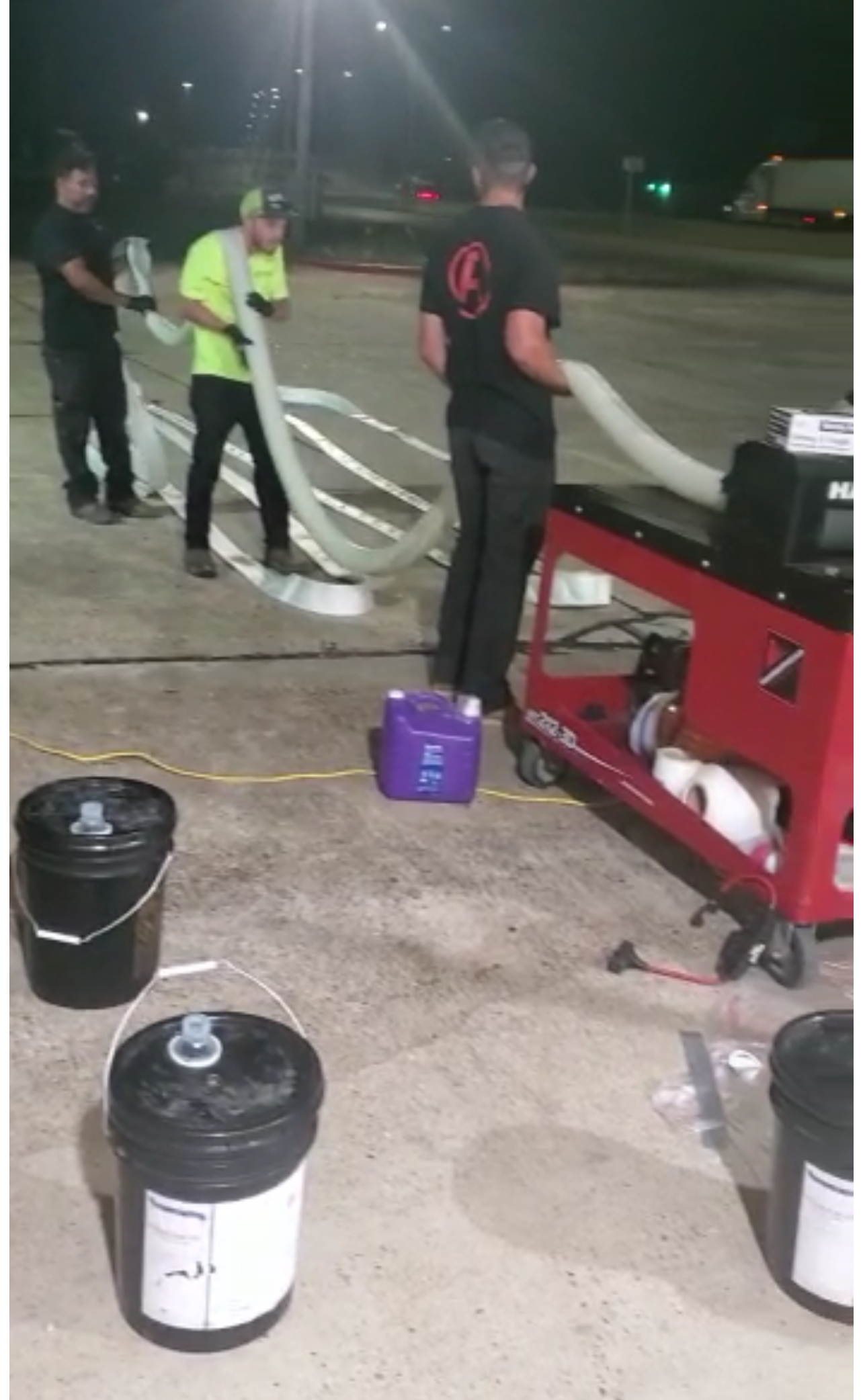
Traffic disruption has an environmental component. Lane closures and detours can increase vehicle idling, travel distance, and congestion. Extended work zones may also affect transit routes, emergency access, deliveries, and pedestrian movement. A shorter or smaller work zone can reduce these secondary impacts. This is particularly valuable for municipal projects beneath busy roads and commercial corridors.
Industrial and commercial sites face similar concerns. Excavation may interfere with loading areas, production lines, parking, internal traffic, or customer access. Eco-friendly pipe rehabilitation can help maintain operations while work proceeds, reducing the need for temporary facilities or extensive reconstruction. Disruption avoidance is not merely a convenience. It can be considered alongside direct construction impacts when comparing project alternatives.
Protecting Existing Landscapes and Site Features
Pipelines frequently pass beneath mature trees, planted areas, decorative hardscapes, and developed public spaces. Excavation can damage root systems, alter drainage patterns, and require replacement of established landscape features.
Trenchless installation may reduce the footprint around these assets. This can help preserve:
- Mature vegetation
- Tree root zones
- Irrigation systems
- Parks and recreational areas
- Historic streetscapes
- Site grading
- Stormwater features
- Finished architectural surfaces
Sensitive locations still require careful planning. Access pits, equipment staging, bypass systems, and material handling must be positioned to avoid creating a different disturbance elsewhere on the site.
Supporting Water and Soil Protection
A deteriorated pipe can allow groundwater to enter the system through infiltration or permit wastewater or process fluids to escape through exfiltration. Infiltration adds unnecessary flow to collection and treatment systems. Exfiltration can create environmental and structural concerns around the pipeline. A properly designed and installed liner or coating can restore continuity within the host pipe and address cracks, corrosion, leaking joints, and other defects.
Depending on the selected system, rehabilitation may help:
- Reduce groundwater infiltration
- Limit exfiltration from damaged lines
- Restore hydraulic function
- Protect surrounding soil
- Reduce unnecessary treatment volume
- Support regulatory compliance
- Lower the risk of failure-related releases
These outcomes depend on accurate condition assessment, proper cleaning, material compatibility, installation quality, and verification. Rehabilitation cannot compensate for an incorrectly diagnosed problem or unsuitable host pipe.
Extending Infrastructure Life Instead of Rebuilding Early
One of the most important trenchless technology benefits is the ability to extend the useful life of an existing asset, rather than abandoning the embedded material and energy already invested in the original pipeline. Rehabilitation uses that alignment as the foundation for a renewed system. Cured-in-place pipe can form a continuous, tight-fitting pipe within the existing conduit. Other methods, including spray-applied liners and epoxy coatings, may address different diameters, geometries, materials, and performance needs.
This asset-life extension supports green infrastructure planning by delaying the environmental and financial costs of full replacement. It may also allow an owner to coordinate future capital work more strategically instead of responding to emergency failure.
Longevity must be supported by engineering, not assumed from the method name. Design calculations should address existing pipe condition, groundwater, soil and live loads, internal pressure where applicable, chemical exposure, and required service performance.
Comparing Open-Cut and Trenchless Project Impacts
The following table provides a planning-level comparison. Actual impacts should be calculated for the specific project.
| Project Factor | Open-Cut Replacement | Trenchless Rehabilitation |
|---|---|---|
| Excavation | Often continuous along the alignment | Generally limited to access locations |
| Soil removal | Potentially substantial | Usually reduced |
| Imported materials | Pipe, bedding, backfill, and surface materials | Liner or coating materials with limited restoration |
| Truck traffic | Hauling and multiple material deliveries | Typically fewer bulk-material trips |
| Surface restoration | May include roads, floors and landscaping | Usually concentrated around access areas |
| Traffic disruption | Larger work zones may be required | Often a smaller surface footprint |
| Existing pipe | Removed, abandoned, or replaced | Used as the host or installation pathway |
| Operational disruption | May be extensive depending on location | Often reduced, though bypass planning may still be needed |
| Environmental controls | Excavation, dewatering, erosion, and waste controls | Material handling, curing, emissions, and waste controls |
This comparison should not replace a feasibility study. Severe collapse, major deformation, inadequate capacity, or alignment problems may make replacement necessary.
Proof, Compliance, and Quality Assurance
Technical stakeholders need documentation showing that the installed system meets the project requirements. At Advanced Pipe Repair, we begin by identifying pipeline conditions and developing a scope around the actual failure mechanism.
A defensible rehabilitation program may include:
- Pre-installation video inspection
- Cleaning and host-pipe preparation records
- Pipe measurements and field verification
- Product and resin submittals
- Design calculations
- Applicable ASTM references
- Material certifications
- Cure monitoring records
- Samples or testing when specified
- Lateral reinstatement documentation
- Post-installation video
- Final project records
These controls protect more than product quality. An installation that performs as intended reduces the likelihood of premature repair, repeat mobilization, and additional material use. APR installs products approved and third-party tested to applicable ASTM specifications. We also use certified and tested materials selected for the pipeline, exposure, and performance requirements of the project.
Build Environmental Performance into the Scope
The environmental benefits of trenchless pipe rehabilitation are strongest when sustainability is treated as a measurable project requirement. Reduced excavation, hauling, restoration, and disruption can create meaningful value, but those advantages should be evaluated alongside structural performance, installation controls, compliance, and expected service life.
Advanced Pipe Repair helps municipalities, industrial facilities, commercial properties, and utility partners assess damaged pipelines and select an appropriate long-term solution. Contact us to discuss inspection findings, access constraints, rehabilitation options, and the documentation required for your project.