
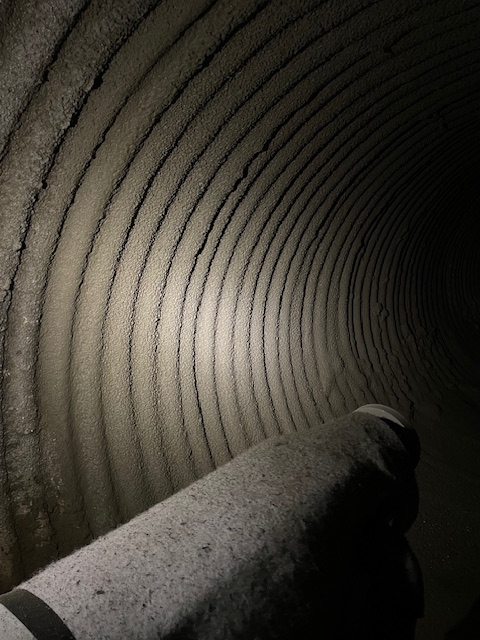
field applied cement mortar lining
When aging water or sewer lines start showing signs of corrosion, leaks, or rough interior surfaces, full pipe replacement isn’t always necessary. Field-applied cement mortar lining offers a proven way to restore pipelines from the inside, without excavation or lengthy service interruptions. This technique extends service life, improves flow, and meets rigorous American Water Works Association (AWWA) standards for safety and performance.
Let’s take a closer look at what this method involves, how it’s performed, and why it’s trusted for infrastructure rehabilitation across the country.
What “Field-Applied” Means in Practice
The term “field-applied” simply means the lining is installed on-site. It is inside the existing pipeline rather than in a controlled factory environment. After the original pipe is clean and the inspection is complete, technicians apply a fresh cement mortar layer to the interior using special centrifugal or spray equipment.
Because the lining application is directly in place, it conforms perfectly to the pipe’s diameter, bends, and joints. The result is a smooth, dense surface that restores hydraulic efficiency while sealing corrosion-prone metal from further damage.
Field application allows crews to rehabilitate sections of pipe without removing them from service for long periods. It’s especially valuable in urban areas or facilities where excavation would disrupt utilities, traffic, or operations.
Step-by-Step Field Applied Cement Mortal Lining Process
Applying a cement mortar lining in the field is a detailed, quality-controlled process designed for consistency and long-term adhesion. Here’s how it typically works:
- Preparation and cleaning: The pipe interior must be completely free of scale, rust, and debris. Crews use mechanical cleaning, abrasive blasting, or high-pressure water jets to remove buildup. This step ensures the mortar will bond securely to the metal substrate.
- Inspection: Once clean, a visual inspection checks for defects, holes, or structural weaknesses. Any necessary repairs are made before lining begins.
- Mortar mixing: Technicians prepare a blend of sand, cement, and water according to AWWA specifications. The mixture’s consistency is carefully monitored: too dry and it won’t bond properly; too wet and it may slump during curing.
- Application: Using a high-speed centrifugal lining machine or spray nozzle, the mortar is evenly applied to the pipe’s interior surface. As the equipment moves through the pipe, it forms a uniform lining typically ranging from 1/8-inch to 1/2-inch thick, depending on project requirements.
- Finishing and curing: After application, the lining is smoothed and allowed to cure. Controlled moisture and temperature conditions help achieve optimal strength and prevent cracking.
- Final inspection and testing: The finished lining is inspected visually and sometimes tested for thickness and adhesion. Once approved, the pipeline is disinfected (if applicable) and returned to service.
Each step must meet strict standards to ensure the lining performs as designed. When properly executed, this process delivers results comparable to factory-lined pipe sections.
AWWA C602 Compliance Overview
All cement mortar lining work on ferrous pipelines must conform to AWWA C602, the standard that governs field-applied linings for water pipelines. This document specifies:
- Approved materials for cement and sand mixtures
- Minimum thicknesses based on pipe diameter
- Application tolerances and surface preparation requirements
- Curing procedures to prevent shrinkage or cracking
- Inspection, testing, and acceptance criteria
Compliance ensures every installation meets the same performance benchmarks, regardless of project size or location. AWWA standards are known nationwide for their consistency. They also have a reputation for helping utilities and engineers maintain public health and system reliability.
Contractors who follow C602 closely deliver results that meet municipal and industrial quality expectations, all while giving asset owners confidence in long-term durability.
Typical Use Cases for Cement Mortar Lining
This technique is versatile and works for a wide range of ferrous pipelines, including:
- Water mains: Restoring hydraulic capacity by smoothing interior surfaces and sealing corrosion.
- Steel pipes: Protecting against pitting and rust in transmission or distribution systems.
- Cast-iron lines: Reinforcing older infrastructure while improving water flow and pressure.
- Reclaimed water and sewer lines: Preventing buildup, scaling, and chemical attack.
Because cement mortar is naturally alkaline, it creates a protective barrier that resists corrosion in metal pipes. It also minimizes tuberculation—the rough, rust-like buildup that restricts flow over time.
This makes it an ideal solution for cities, utilities, and industrial facilities looking to extend the life of aging systems without costly replacements.
Service Life Expectancy and Maintenance Tips
When properly applied, a cement mortar lining can extend a pipe’s service life by several decades. Many installations from the mid-20th century are still performing reliably today. Typical lifespan estimates range from 50 to 75 years, depending on environmental conditions, water chemistry, and maintenance practices.
Regular maintenance ensures the lining continues to perform as intended, keeping the system efficient and cost-effective for decades.
Field-Applied Cement Mortar Lining: Proven, Practical, and Sustainable
Unlike full pipe replacement, which involves excavation, transport, and disposal, lining is environmentally friendly and minimally invasive. It reuses the existing structure while restoring performance, saving both resources and time.
If your facility or municipality is exploring trenchless rehabilitation options, contact Advanced Pipe Repair. Our experienced team provides AWWA-compliant lining and pipe restoration services designed to deliver lasting performance and efficiency. Reach out today to learn more about how we can help extend the life of your pipelines safely and sustainably.