
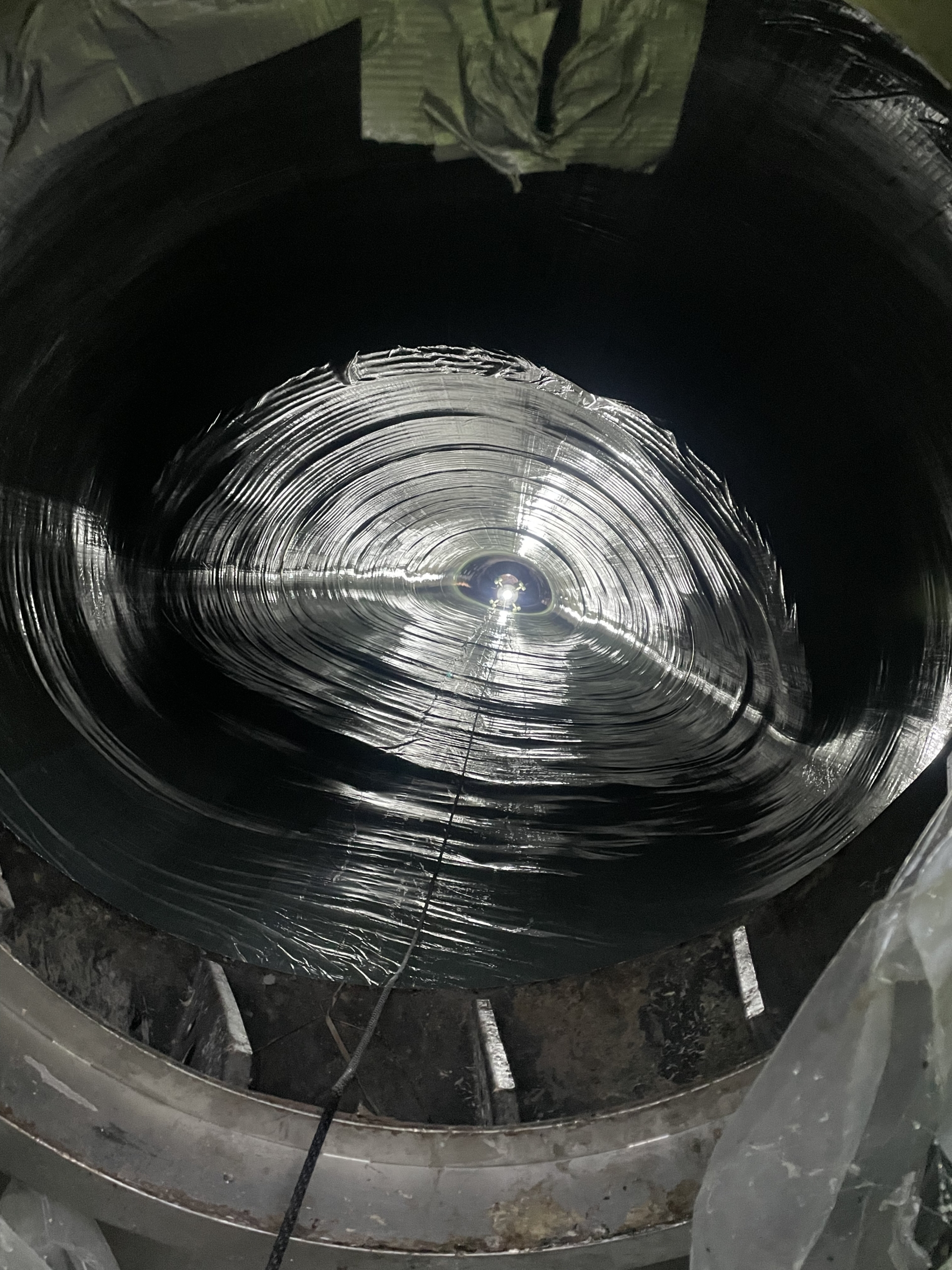
host pipe condition assessment
Trenchless rehabilitation can extend pipeline service life while limiting excavation, but success depends on what remains inside and around the existing pipe. A thorough host pipe condition assessment helps determine whether lining is appropriate, which preparation steps are necessary, and where localized repairs may be required before installation.
At Advanced Pipe Repair, we start by understanding the failure rather than assuming every damaged line needs the same solution. For facility managers, engineers, and utility decision-makers, several conditions deserve attention before a rehabilitation scope becomes a construction commitment.
What a Host Pipe Condition Assessment Should Establish
An inspection should produce information that supports design and installation decisions. Identifying a crack is useful; documenting its location, surrounding deformation, and relationship to nearby joints makes that finding more actionable.
Our video pipe inspection services help identify internal defects and obstructions. However, camera footage alone cannot establish every structural or environmental condition affecting rehabilitation.
Depending on the application, project records should address:
- Existing material, diameter, and changes in cross section
- Cracks, fractures, corrosion, and missing wall sections
- Joint displacement, deformation, and standing water
- Roots, deposits, protruding connections, and other obstructions
- Groundwater infiltration and evidence of surrounding soil loss
Inspection findings should connect directly to preparation requirements, design assumptions, and acceptance criteria.
Structural Deterioration and Remaining Support
Cracking or wall loss does not automatically eliminate cured-in-place pipe, or CIPP, as an option. The question is whether the proposed system is designed for the deterioration present and the loads it must withstand.
A structural liner and a protective coating serve different purposes. A coating intended to address internal corrosion should not be assumed to bridge missing sections or carry external loads.
Engineers must establish the appropriate design condition and account for groundwater, soil loading, traffic loading, and other applicable forces. Existing pipe support should never be credited without a defensible basis.
Localized collapse creates another concern: installation requires a usable pathway. A crushed or blocked segment may need excavation and replacement before the remaining line can be rehabilitated.
Deformation, Diameter Changes, and Offset Joints
Pipe geometry affects liner sizing, installation, and finished performance. Ovality, abrupt transitions, and displaced joints can complicate placement or prevent the lining system from fitting as intended.
NASSCO notes that lateral CIPP is appropriate for certain cracked or fractured pipes that generally retain their original shape. That distinction reinforces why geometry matters alongside visible damage.
Conditions requiring closer evaluation include:
- Ovality: Flattening that affects liner fit and structural calculations
- Offset joints: Displacement that restricts passage or creates abrupt edges
- Diameter transitions: Changes requiring verified dimensions and suitable installation details
- Tight bends: Geometry that challenges placement and increases wrinkle potential
There is no universal allowable offset or deformation percentage for every product and application. Acceptance limits should come from the selected system, project specifications, and engineering review.
Deposits, Roots, and Surface Preparation
The pipe visible before cleaning may look substantially different after preparation. Grease, mineral scale, sediment, and roots can conceal defects and prevent reliable measurements.
Cleaning must create conditions suitable for the selected rehabilitation method without unnecessarily damaging weakened pipes. Aggressive removal techniques require particular care where corrosion or fractures have reduced wall strength.
Preparation also varies by technology. Adhesion-dependent coatings require a suitable substrate and specified surface condition. Structural CIPP should not automatically be described as relying on adhesion to the original wall.
After cleaning, another inspection should confirm that obstructions are removed and newly exposed defects are documented. Otherwise, installation decisions may still rely on incomplete information.
Infiltration and Conditions Outside the Pipe
Active groundwater entry affects more than the appearance of inspection footage. Depending on the lining system and curing method, uncontrolled infiltration can interfere with installation and require treatment beforehand.
The surrounding ground also matters. Missing wall sections, displaced joints, or soil entering the pipe may indicate voids or compromised bedding that internal rehabilitation alone will not correct.
These findings should prompt questions such as:
- Where is groundwater entering the system?
- Is soil migrating into the pipe?
- Does the surrounding ground require stabilization?
- How will liner ends and service connections be sealed?
A continuous liner does not automatically eliminate every infiltration pathway. NASSCO identifies connections, terminations, and the space between the liner and existing pipe as considerations in infiltration control.
Sags, Slope, and Hydraulic Restrictions
A structurally renewed pipe can still perform poorly if its original alignment creates drainage problems. Conventional lining generally follows the existing route; it does not lift a sagging segment or restore the intended slope.
Standing water therefore needs investigation. It may reflect a belly, downstream restriction, or operating conditions present during inspection.
Lining also reduces internal diameter. A smoother finished surface may improve flow characteristics, but that benefit does not guarantee adequate capacity. Engineers should evaluate the finished dimensions, anticipated flows, and existing restrictions.
For an overloaded system, restoring structural integrity and solving hydraulic capacity are separate requirements.
Connections, Access, and Installation Readiness
Branch connections must be located before lining and addressed in the installation plan. Unrecorded laterals or protruding taps can complicate placement, reinstatement, and final inspection.
Access limitations also affect feasibility. Manhole dimensions, cleanout locations, bends, and available staging space influence how equipment and materials reach the repair area.
Before mobilization, the scope should identify connection treatment, flow control, required spot repairs, and conditions that trigger additional review. Clear hold points help prevent installation from proceeding when field conditions differ materially from the approved plan.
Be sure to plan for who will approve unexpected conditions and how changes will affect scheduling, bypass operations, and facility access. Establishing these responsibilities before work begins helps owners avoid rushed decisions when cleaning or inspection reveals damage that requires a revised repair approach.
Build the Repair Around Verified Conditions
Successful rehabilitation begins with matching the repair to the pipeline’s actual condition. Structural deterioration, geometry, infiltration, surface preparation, and hydraulic limitations each influence whether the proposed approach can deliver the intended result.
At Advanced Pipe Repair, we use inspection findings to develop a practical scope for commercial, industrial, and public infrastructure projects. Contact our team to discuss a host pipe condition assessment and identify the information needed to plan your next repair with confidence.