
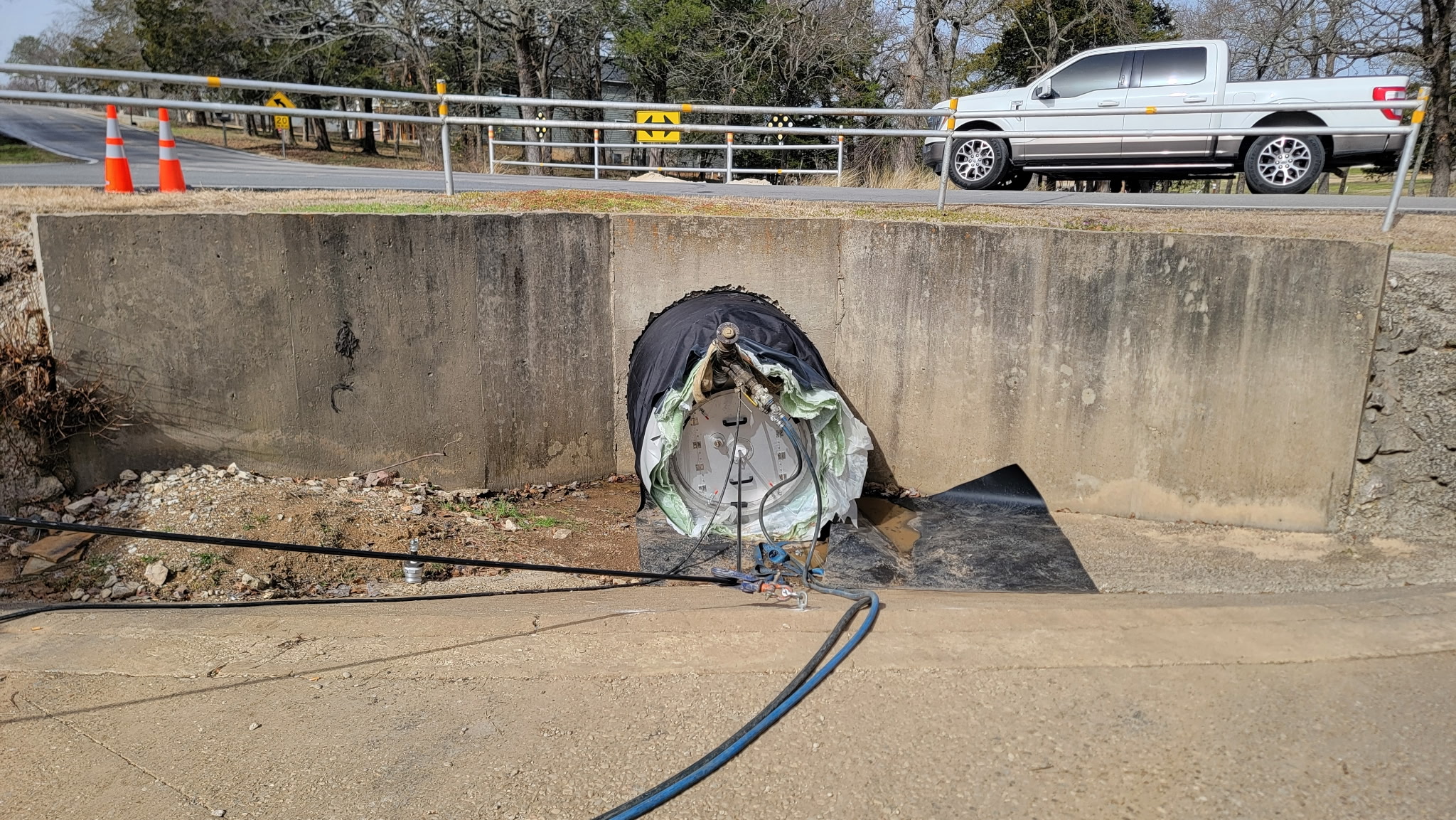
trenchless pipe repair traffic impact
Underground pipeline failures create challenges that extend well beyond the damaged pipe. When conventional replacement requires a continuous trench, the project may affect traffic lanes, parking areas, sidewalks, landscaping and access to nearby facilities. For municipalities, utilities and commercial property owners, the resulting disruption can become a significant part of the project’s total cost and risk profile. Reducing trenchless pipe repair traffic impact requires more than choosing a less invasive technology. It demands accurate condition assessment, an appropriate rehabilitation method and a traffic management plan coordinated around the actual work zone.
Trenchless rehabilitation allows us to restore many deteriorated pipelines through existing access points or strategically placed excavations. This can substantially reduce the surface footprint compared with open-cut replacement. The result is often fewer lane closures, less pavement removal, shorter restoration schedules and better access for the public, tenants, employees and emergency services.
However, trenchless technology is not automatically suitable for every pipeline. A defensible project begins with understanding the asset’s condition, geometry, function, and surrounding site constraints.
Why Surface Disruption Matters to Project Planning
Direct construction expenses tell only part of the story. Open-cut underground utility repair can create indirect costs that are difficult to isolate but significant to affected stakeholders.
Depending on the location, surface disruption may lead to:
- Traffic detours and reduced roadway capacity
- Interrupted access to businesses, loading areas, or parking facilities
- Sidewalk closures and altered pedestrian routes
- Pavement, curb, and landscaping restoration
- Noise, dust, and construction debris
- Longer exposure of workers and motorists to an active work zone
- Coordination challenges involving emergency responders and transit providers
- Reduced productivity at commercial or industrial facilities
These consequences matter to municipal engineers and procurement managers because they can affect public safety, community complaints, contract administration, and total project cost. Industrial facility managers must also consider production schedules, delivery routes, employee access, and the potential consequences of shutting down a critical line.
A lower bid for conventional excavation may not represent the lowest overall cost once restoration, traffic control, business interruption, and schedule exposure are included.
How Trenchless Pipe Repair Reduces Traffic Disruption
Most trenchless methods are designed to rehabilitate or replace underground infrastructure without exposing the full length of the existing pipe. Instead of excavating a continuous trench, crews typically work from manholes, cleanouts, vaults, or limited access pits.
For appropriate applications, this smaller footprint can provide several practical advantages.
Fewer and Smaller Excavations
Open-cut replacement generally requires access along the pipeline alignment. A trench may cross travel lanes, intersections, landscaped areas, or paved operational spaces. Trenchless excavation limits ground disturbance to selected access locations when excavation is necessary at all.
This does not mean the project will always be excavation-free. Access pits may be needed when existing entry points are unavailable, a section has collapsed, or connections require modification. Even in those cases, localized excavation can be considerably less disruptive than opening the entire alignment.
Reduced Lane Closure Requirements
Because work is concentrated around access points, a trenchless project may occupy less roadway space. Depending on the site, pipe depth and installation method, traffic may be maintained through lane shifts, temporary restrictions or localized closures instead of a complete shutdown.
Traffic control remains essential. Crews, equipment, hoses, curing systems, and service vehicles still need protected working space. However, the smaller construction zone may give the traffic engineer greater flexibility when designing the control plan.
Less Pavement Removal and Reconstruction
Excavating through a roadway requires more than removing soil. Crews may need to saw-cut pavement, remove base materials, manage excavated material, backfill the trench, and reconstruct the road section according to governing specifications.
Each stage introduces schedule, inspection, and quality-control requirements. Settlement, pavement joints, and mismatched surface repairs may also create future maintenance concerns.
By preserving more of the existing surface, trenchless construction minimizes excavation and reduces the amount of pavement that must be reconstructed. This can be particularly valuable on heavily traveled roads, recently resurfaced streets, and sites with expensive specialty paving.
Shorter Periods of Public Exposure
A smaller surface footprint can reduce the amount of time motorists, pedestrians, and adjacent properties are exposed to construction activities. Actual schedules vary according to pipe length, diameter, cleaning requirements, curing method, access, and bypass needs. Nevertheless, trenchless rehabilitation often eliminates several time-intensive excavation and restoration phases.
Reduced project duration can lower exposure to:
- Changing traffic conditions
- Weather-related delays
- Open excavations
- Temporary access restrictions
- Noise and dust
- Public complaints
- Extended traffic-control costs
The objective is not merely to complete the liner installation quickly. It is to shorten the total period during which the site is affected.
The Relationship Between Trenchless Work and Traffic Management
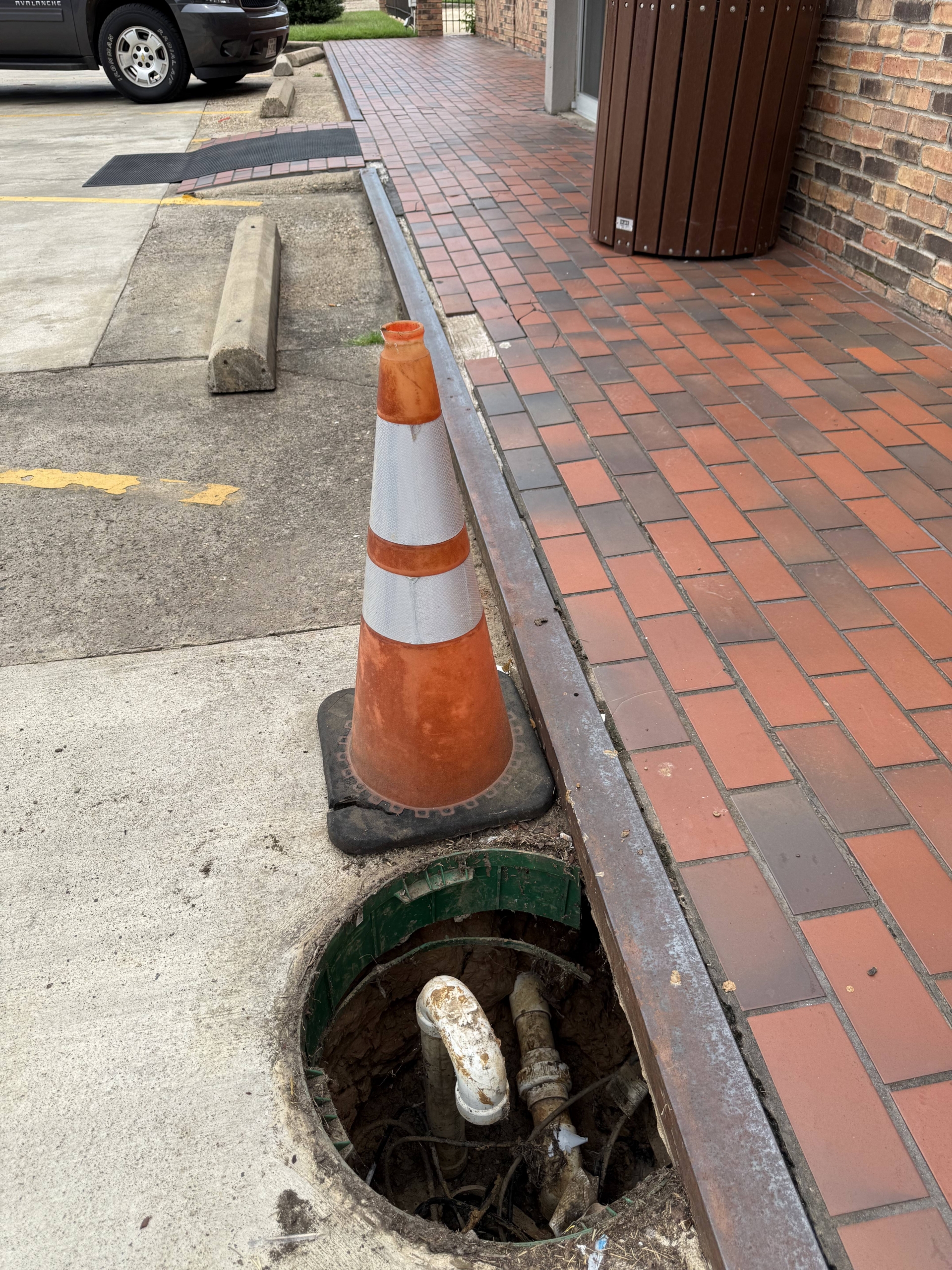
Trenchless rehabilitation reduces the work zone, but it does not eliminate the need for traffic management. The traffic-control approach should reflect roadway classification, vehicle speed, pedestrian activity, work-zone duration, equipment placement, and local requirements.
A project-specific plan may address:
- Advance warning signs and public notifications
- Lane shifts, tapers, and channelizing devices
- Flagging operations
- Pedestrian and ADA-compliant routing
- Access for emergency and service vehicles
- Bus stops and public transportation routes
- Business entrances and loading zones
- Work-hour restrictions
- Equipment staging and material deliveries
- Temporary bypass piping
Coordination is especially important when manholes or other access points are located within active lanes. Even if no trench is opened, crews may need temporary control of the area to clean the line, install rehabilitation materials, and complete inspections.
Night or off-peak work may further reduce congestion, but scheduling decisions should consider noise restrictions, visibility, crew safety, and curing requirements. Trenchless methods provide options; careful planning determines how effectively those options translate into reduced disruption.
Evaluating a Pipeline Before Selecting a Method
The benefits of trenchless utility repair depend on whether the selected system is appropriate for the existing asset. We begin with inspection and cleaning because a rehabilitation design is only as reliable as the information supporting it.
A typical evaluation considers:
- Pipe material, diameter, and length
- Cracks, corrosion, deformation, or joint separation
- Deposits, grease, scale, and other obstructions
- Active infiltration or leakage
- Changes in diameter or alignment
- Service connections and lateral locations
- Bends and access limitations
- Structural capacity of the host pipe
- Flow conditions and shutdown constraints
- Proximity to other underground utilities
Video inspection provides direct visual information about internal conditions. Additional measurement, testing, or engineering review may be necessary for large-diameter, pressure, or structurally complex systems.
Cleaning is also a critical part of preparation. Deposits, roots, corrosion products, and debris can interfere with liner placement or bonding. The cleaning method must remove obstructions without causing avoidable damage to an already weakened pipe.
Rehabilitation Methods and Their Surface Footprints
Trenchless repair is a category of technologies rather than a single process. The correct method depends on the asset, performance requirements, and project constraints.
Cured-in-Place Pipe
Cured-in-place pipe, or CIPP, uses a resin-impregnated liner installed within the existing pipeline. The liner is positioned and cured to form a continuous pipe inside the host pipe. CIPP can be used in a variety of gravity pipeline applications and may provide a structural rehabilitation solution without continuous excavation.
Access, cleaning, bypass pumping, curing, and lateral reinstatement must all be considered during planning. For roadway applications, the ability to work from manholes or limited access locations can reduce disturbance along the alignment.
There is also a UV CIPP option that uses UV for curing to speed up the timeline.
Spray-in-Place Rehabilitation
Spray-applied systems may be suitable for certain vertical pipes, irregular configurations, and other applications where a conventional liner is not the preferred solution. The material is applied to the prepared interior surface to form a protective or rehabilitative layer.
Because work can often be performed through limited access locations, this approach may help avoid demolition to walls, ceilings, floors, or exterior surfaces. Its suitability depends on pipe condition, material compatibility, and required structural performance.
Comparing Surface Impacts
| Project Consideration | Open-Cut Replacement | Trenchless Rehabilitation |
|---|---|---|
| Excavation footprint | Often extends along the pipe alignment | Usually concentrated at access points |
| Traffic control | May require extended lane or road closures | Often supports smaller or shorter closures |
| Pavement restoration | Typically required across the trench area | Usually limited to access excavations |
| Utility conflict exposure | Greater due to continuous excavation | Reduced, although verification remains necessary |
| Business or facility access | May be restricted along the work zone | Often easier to maintain |
| Surface restoration | Can include pavement, curbs, and landscaping | Generally more limited |
| Application limits | Can address nearly any accessible failed pipe | Depends on pipe condition and method suitability |
This comparison should not replace a project-specific cost and constructability analysis. Site access, depth, groundwater, pipe condition, permitting, and bypass requirements can significantly affect either approach.
Reduce Trenchless Pipe Repair Traffic Impact with Careful Planning
Successful trenchless pipe repair traffic impact reduction starts before equipment even arrives at the site. It requires inspection data, a clearly defined scope, appropriate material selection, and coordination among the owner, engineer, contractor, utility representatives, and traffic-control team.
At Advanced Pipe Repair, we evaluate each pipeline to determine whether a trenchless rehabilitation method is appropriate. Our team serves commercial, industrial, municipal, and government clients with solutions designed to restore underground infrastructure while limiting unnecessary excavation and surface disturbance.
If aging or damaged pipelines are creating operational, roadway, or access concerns, contact Advanced Pipe Repair. We can help assess the system, document existing conditions, and develop a rehabilitation plan based on the technical requirements of the project.