
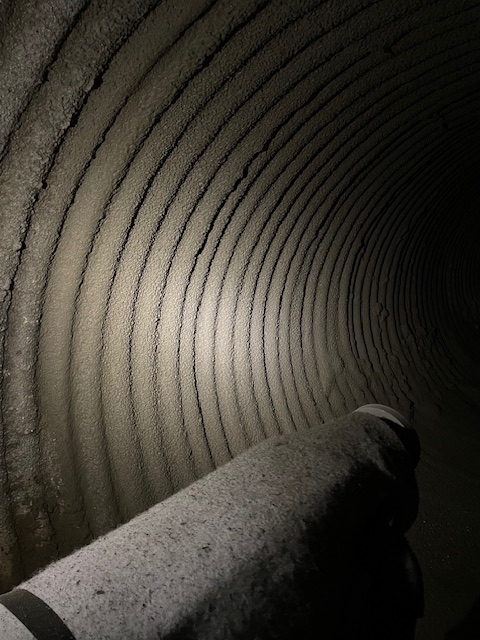
large diameter pipe lining
When large-diameter pipes underground start to experience issues, the repair process can look daunting. Traditional excavation means tearing up roads, interrupting utility service, and spending weeks on restoration after the work is done. But at Advanced Pipe Repair, we take a different approach. It’s one that restores critical infrastructure from the inside out.
By using large-diameter pipe lining, we can repair storm drains, sewers, and water mains without digging up a single foot of pipe. This trenchless method not only saves time and money but also delivers a stronger, longer-lasting pipeline.
What Qualifies as a “Large-Diameter” Pipe?
In trenchless rehabilitation, the term “large-diameter” typically refers to pipes measuring 36 inches or greater, though in many cases, Advanced Pipe Repair restores pipelines exceeding 120 inches (10 feet) in diameter.
These large systems are essential to public and industrial infrastructure. They carry:
- Stormwater from municipal drainage systems
- Sanitary sewer flow from communities and facilities
- Industrial process water or cooling systems
- Potable water in municipal mains
Because of their size, replacing these pipelines through excavation would mean major disruptions like closing roads, rerouting utilities, and often tearing through paved or landscaped areas. That’s where our trenchless methods come in.
How Trenchless Large-Diameter Pipe Lining Works (Step-by-Step)
Advanced Pipe Repair uses cured-in-place pipe (CIPP) and related trenchless lining systems to rehabilitate large-diameter pipelines. While each project varies based on material and condition, the core process follows a proven sequence:
1. Inspection and Cleaning
Before any repair, our technicians perform a CCTV inspection using robotic cameras. This allows us to locate cracks, corrosion, offsets, or infiltration points. Once inspected, we use hydro-jetting and descaling tools to clean the interior walls and remove any buildup that could interfere with lining adhesion.
2. Assessment and Design
Based on the inspection data, we design a custom liner that matches the diameter, length, and structural requirements of the host pipe. This includes calculating resin saturation levels and curing methods (steam, hot water, or UV).
3. Liner Inversion or Pull-In
The resin-impregnated liner, which is typically a flexible felt or fiberglass tube, is inverted or winched into the host pipe through existing access points such as manholes or vaults. This eliminates the need to excavate.
4. Curing and Hardening
Once positioned, the liner is cured using steam, hot water, or UV light. The resin hardens, forming a structural “pipe within a pipe” that seals joints, stops infiltration, and restores full flow capacity.
5. Final Inspection and Reinstatement
After curing, a robotic cutter reinstates service laterals (if applicable), and a final camera inspection verifies full restoration. The new liner is smooth, watertight, and ready for decades of use.
Typical Applications for Large-Diameter Pipe Lining
Large-diameter trenchless lining is used across a wide range of municipal, industrial, and commercial systems. Some of the most common include:
Stormwater Systems
Aging concrete or corrugated metal storm drains often corrode, crack, or separate at joints. Lining these pipes prevents soil infiltration and collapse, restoring flow capacity while protecting surrounding ground stability.
Sanitary Sewer Mains
Infiltration and inflow are common problems in large sanitary mains. CIPP lining creates a seamless barrier that stops groundwater intrusion, prevents exfiltration, and improves flow efficiency.
Industrial and Plant Systems
Facilities like power plants, refineries, and food processors often use large underground process lines. Trenchless rehabilitation allows these systems to be restored without shutting down production.
Water Transmission Mains
For large potable water mains, specialized lining materials and resins are used that meet NSF/ANSI 61 standards for drinking water safety.
Materials Used for Large-Diameter Pipe Lining
Advanced Pipe Repair utilizes several different lining materials depending on the project requirements:
- Epoxy Linings: ideal for smaller-scale or smooth-walled pipes where corrosion protection is key.
- Cementitious Linings: restore the original wall thickness and structural strength. These are troweled or sprayed on and can be layered for reinforcement.
- Cured-In-Place Pipe (CIPP): the most common method for large-diameter trenchless rehabilitation. The resin-saturated liner creates a fully structural, load-bearing replacement.
Advanced Pipe Repair frequently uses solutions that add strength and contribute to a longer lifespan. This allows us to handle even the largest municipal mains.
We engineer each system to extend pipeline life by 50 years or more, depending on material and environment.
Benefits of No-Dig Large Diameter Lining
The appeal of large-diameter pipe lining goes beyond avoiding excavation. The method delivers measurable performance and economic benefits:
- No-dig installation
- Lower cost
- Rapid turnaround
- Environmentally friendly
- Stronger than new
- Long-term reliability
These benefits make trenchless technology the preferred choice for municipalities and facility owners alike.
Case Study: Restoring a 96-Inch Storm Line Without Excavation
Recently, Advanced Pipe Repair was called to rehabilitate a 96-inch corrugated metal stormwater pipe that ran beneath a busy municipal roadway. Excavating and replacing it would have meant closing lanes for weeks. This was not an option for the client.
Instead, the APR team put a CIPP liner to work, installing it through existing access points. The project was complete in just three days, including cleaning, liner installation, and curing.
The results were dramatic:
- Flow capacity increased by 20% due to the smooth interior finish
- No road closures or surface repairs were required
- The city saved over 60% in costs compared to open-cut replacement
This project demonstrates how large-diameter trenchless lining can restore vital infrastructure quickly and economically while minimizing community impact.
Large Diameter Pipe Lining Solutions
When it comes to restoring massive storm, sewer, or water systems, traditional excavation simply can’t match large-diameter pipe lining. With these high-tech materials, Advanced Pipe Repair helps cities, utilities, and industries keep essential systems running.
If you’re managing infrastructure with aging large-diameter pipelines, contact us today to discuss trenchless rehabilitation options. Our team will evaluate your system and recommend the right solution.