
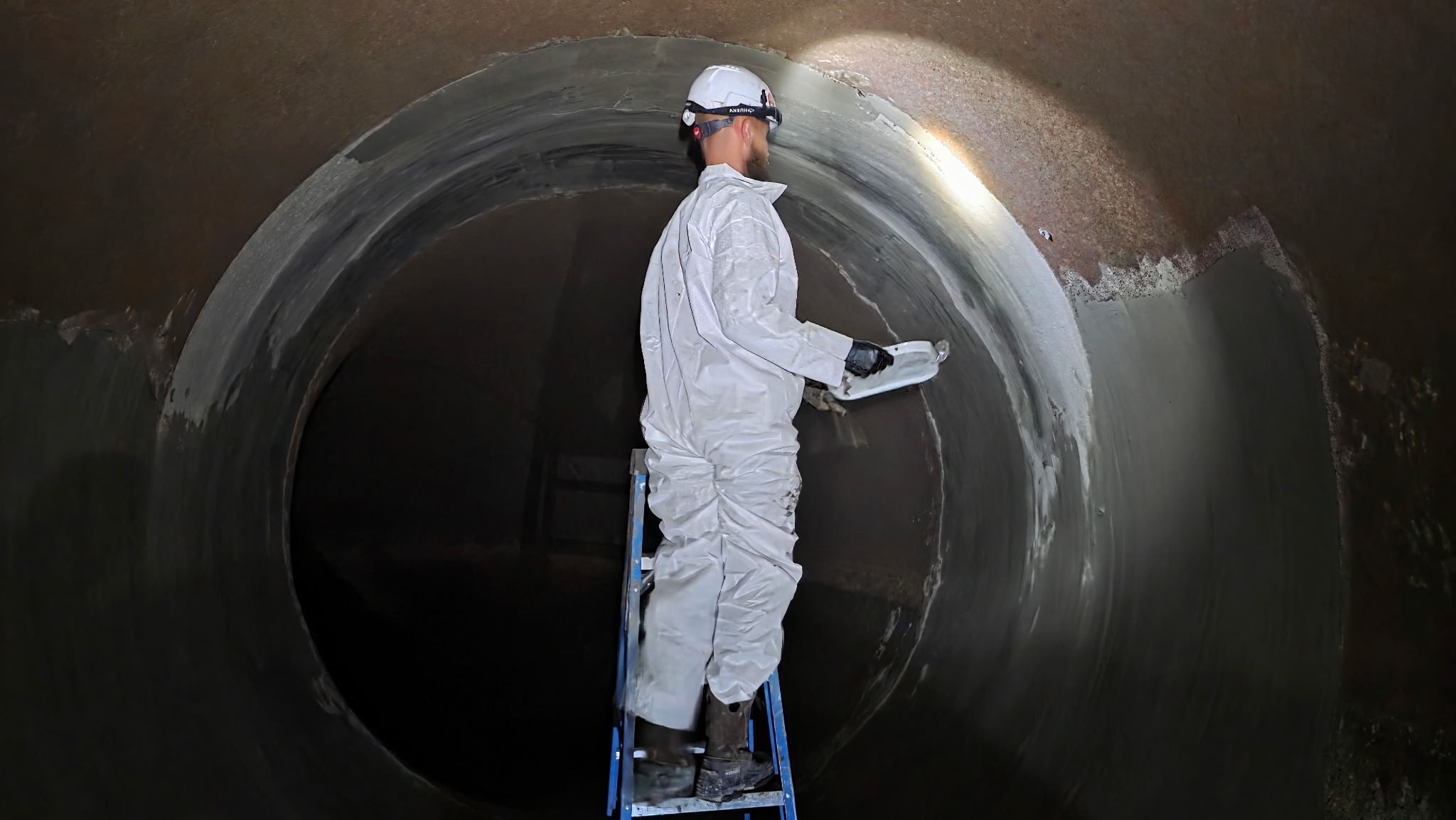
limitations of trenchless pipe repair
Trenchless rehabilitation can reduce excavation, protect surface assets, and shorten the disruption associated with restoring major pipelines. However, it is not automatically the safest or most economical solution for every project. The limitations of trenchless pipe repair become especially important as diameter, flow, structural loading, access requirements, and installation complexity increase. Municipal engineers, facility managers, consultants, and procurement teams need a defensible method-selection process based on verified conditions and not just a general preference for avoiding excavation.
Large Diameter Changes the Risk Profile
A technique that performs reliably in a smaller gravity sewer may present different engineering and construction risks in a large interceptor, culvert, industrial line, or vertical riser. Larger systems carry greater flow volumes, require heavier materials, and may have more demanding bypass requirements. They can also be exposed to higher external loads, groundwater pressure, industrial chemicals, temperature variation, or unusual geometry.
The consequences of failure are often greater as well. A defect in a major interceptor can affect a large service area. An industrial pipeline outage may interrupt production, while failure beneath a transportation corridor can create safety and access concerns.
Large-diameter pipe repair therefore requires a project-specific review of:
- Host-pipe material and remaining structural capacity
- Diameter, shape, alignment, slope, and ovality
- Depth, soil loading, live loading, and groundwater conditions
- Operating pressure, temperature, and chemical exposure
- Flow control and bypass pumping requirements
- Access dimensions and staging limitations
- Hydraulic capacity requirements
- Applicable design, testing, and acceptance standards
- Consequences of installation defects or premature failure
The objective is not to determine whether a trenchless method can physically be installed. It is to establish whether it can deliver the required structural, hydraulic, operational, and service-life performance at an acceptable level of risk.
Understanding the Limitations of Trenchless Pipe Repair
Trenchless is a broad category rather than a single system. Cured-in-place pipe, slip lining, close-fit lining, spiral-wound systems, spray-applied materials, and pipe bursting operate differently. Each has its own material properties, installation requirements, applicable diameter range, and design assumptions.
One of the most common trenchless pipe repair challenges is selecting a product before completing the condition assessment. A liner cannot correct every defect in the host system. In some situations, lining may conceal a larger structural, geotechnical, or hydraulic problem rather than resolve it.
A feasibility review should distinguish among structural rehabilitation, semi-structural rehabilitation, corrosion protection, leak sealing, and complete replacement. These outcomes are not interchangeable. A coating intended to isolate a metal surface from corrosive conditions should not be specified as though it were a fully structural liner capable of carrying external loads independently.
Severe Collapse or Loss of Alignment
Most lining systems require a continuous pathway through the existing pipe. Complete collapse, severe deformation, major offset joints, or substantial obstructions can prevent cleaning equipment, cameras, installation tools, or liner materials from passing through the segment.
A liner also follows the general alignment of the host pipe. It does not normally correct major sags, reverse slopes, extensive ovality, or a pipe that has shifted because of unstable soil. If the underlying problem is settlement, void formation, erosion, or inadequate bedding, lining the interior may leave the cause of distress unaddressed.
Localized excavation and point repair may make the segment suitable for rehabilitation. When defects are widespread, however, open-cut replacement or another reconstruction method may provide a more reliable result. The decision should reflect both the visible pipe condition and the surrounding geotechnical environment.
Insufficient Hydraulic Capacity
Most internal lining systems reduce the pipe’s inside diameter. A smooth liner may improve the hydraulic coefficient compared with a corroded or heavily deteriorated surface, and that improvement can offset some loss of cross-sectional area. It cannot be assumed to compensate for the reduction under all flow conditions.
Hydraulic modeling should evaluate current demand, peak flow, projected growth, surcharge conditions, and any regulatory capacity requirements. The analysis should use the actual proposed liner thickness and finished diameter rather than nominal values.
If an interceptor is already undersized, rehabilitating the existing profile may preserve a capacity deficiency. Pipe bursting can increase diameter in some applications, but it introduces separate concerns involving soil displacement, nearby utilities, allowable pull length, host-pipe material, and required insertion and receiving pits. For very large pipelines, full replacement or construction of parallel capacity may be the more defensible long-term investment.
Access, Transportation, and Installation Logistics
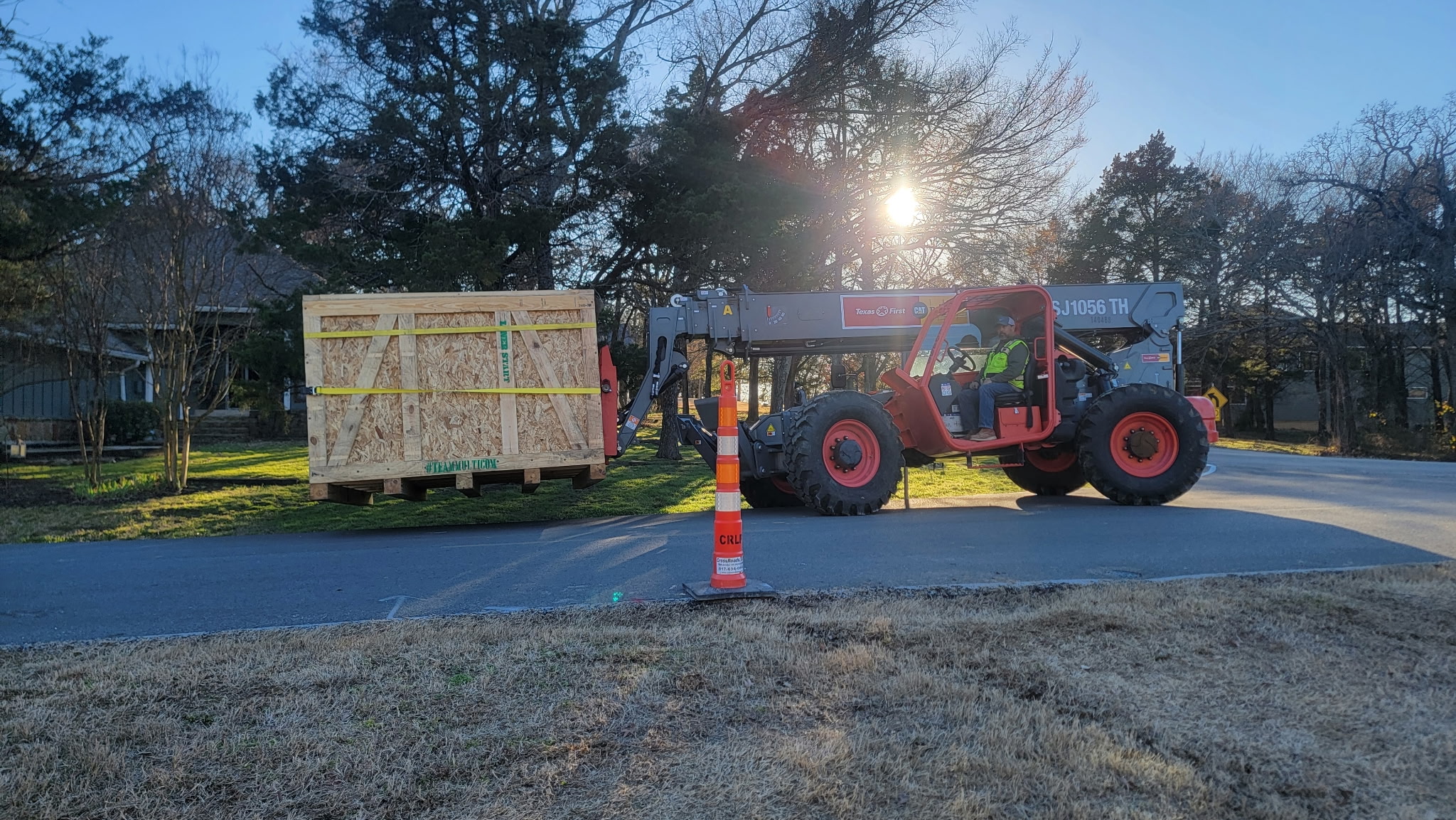
Minimal excavation does not always mean minimal site requirements. Large liners, reels, pumps, boilers, steam equipment, refrigeration units, generators, resin systems, and support vehicles can require a substantial staging area. Access points may need modification to accommodate the installation equipment or liner dimensions.
CIPP becomes heavier and more difficult to handle as diameter, thickness, and length increase. Some large liners cannot be transported after resin impregnation because of weight, width, refrigeration, or delivery limitations. On-site wet-out may be possible, but it introduces additional quality-control responsibilities for resin mixing, impregnation, handling, temperature control, and documentation.
Long installation runs can magnify pulling forces and increase the consequences of a fold, obstruction, or incomplete inversion. Bends, diameter transitions, junctions, protruding taps, and irregular structures must be identified during planning. A method’s published maximum diameter or installation length does not confirm suitability under actual field conditions.
Flow Control and Bypass Risk
Many rehabilitation processes require the pipeline to be taken out of service during cleaning, preparation, installation, curing, inspection, and connection reinstatement. On a large interceptor or process line, bypass pumping may become one of the most expensive and operationally sensitive parts of the project.
The bypass plan must address peak flow rather than average flow alone. It should consider redundancy, backup power, alarm systems, fuel supply, discharge routing, pipe restraint, weather exposure, traffic protection, and emergency response. Industrial facilities may also need temporary systems compatible with temperature, pressure, solids, or chemical characteristics.
Limited shutdown windows can restrict viable pipe rehabilitation methods. If a liner requires more time for installation and curing than the owner can provide, the project may require sectional work, temporary storage, parallel pumping, or another approach. The financial effect of an extended outage must be included in the comparison, particularly when production, healthcare operations, public service, or environmental compliance could be affected.
Pressure, Temperature, and Chemical Compatibility
A system proven in a gravity sewer is not automatically appropriate for a force main, pressurized process line, or potable water application. Internal pressure changes the design requirements, termination details, joint behavior, and potential failure modes.
Chemical exposure can affect resin, coatings, reinforcement, seals, and adhesives. Industrial wastewater may include solvents, acids, alkalis, oils, or elevated temperatures that require specific material testing. Cyclic pressure, vacuum conditions, thermal movement, and abrasive solids must also be considered.
Product data should be evaluated against actual operating conditions, including expected excursions rather than ordinary conditions alone. Owners should require documentation supporting the proposed material’s compatibility, design life, and applicable certifications. For pressure applications, end seals and connections require particular attention because fluid migration between the liner and host pipe can compromise performance.
Quality Control Becomes More Demanding
The disadvantages of trenchless pipe repair are often less about the underlying concept than about the difficulty of verifying field execution. Once installed, much of the work cannot be directly observed. Procurement documents must therefore define measurable quality requirements before construction begins.
For CIPP, important controls may include resin-to-fiber ratio, material storage temperature, liner dimensions, wet-out documentation, insertion pressure, curing temperature, cure duration, cool-down procedures, finished thickness, physical-property testing, and final CCTV inspection. Large-diameter liners can develop circumferential thickness variation if the tube does not expand uniformly. Wrinkles, fins, lifts, dry areas, under-cure, over-cure, or improper terminations can affect hydraulic or structural performance.
A specification that merely requires compliance with an ASTM installation practice may be incomplete. The design should identify the standard and edition, project-specific calculations, minimum material properties, sampling frequency, test methods, acceptance criteria, corrective procedures, and documentation required for closeout.
At Advanced Pipe Repair, we begin with inspection and accurate problem identification because the installation method should follow the evidence. Pre-cleaning and video records establish the baseline, while post-installation inspection documents the completed condition. For high-consequence assets, independent testing or third-party review may also be appropriate.
When Trenchless Pipe Repair Is Not Suitable
Decision-makers asking when trenchless pipe repair is not suitable should look for conditions that conflict with the basic requirements of the proposed system. Warning signs include widespread collapse, unacceptable alignment, inadequate hydraulic capacity, incompatible operating conditions, unreliable bypass feasibility, or an inability to verify installation quality.
The following comparison can support early screening:
| Existing Condition | Potentially Stronger Solution |
|---|---|
| Localized defects with stable surrounding soil | Point repair followed by lining |
| Deteriorated but continuous host pipe | Structural liner designed for verified loads |
| Severe collapse or widespread displacement | Excavation and replacement |
| Need for substantial capacity increase | Upsizing, parallel pipe, or replacement |
| Major sags or reverse grades | Regrading through conventional construction |
| High-pressure or aggressive process service | Application-specific engineered system |
| Extremely limited shutdown window | Phased work, temporary redundancy, or alternative method |
| Irregular noncircular geometry | Custom lining, segmental rehabilitation, or replacement |
This table is only a screening tool. Final selection should be supported by inspection data, calculations, manufacturer qualifications, contractor experience, constructability review, and owner-specific risk criteria.
Select the Method That Fits the Asset
The limitations of trenchless pipe repair do not make trenchless rehabilitation an inferior choice. They establish the boundaries within which it can deliver reliable value. Large-pipe projects succeed when owners verify host-pipe condition, model hydraulic effects, evaluate access and bypass needs, specify compatible materials, and require documented quality control.
Advanced Pipe Repair helps commercial, industrial, municipal, government, and institutional clients evaluate aging pipeline systems and identify the most appropriate long-term solutions. Contact us to discuss your project and develop a repair scope grounded in actual pipeline conditions.