
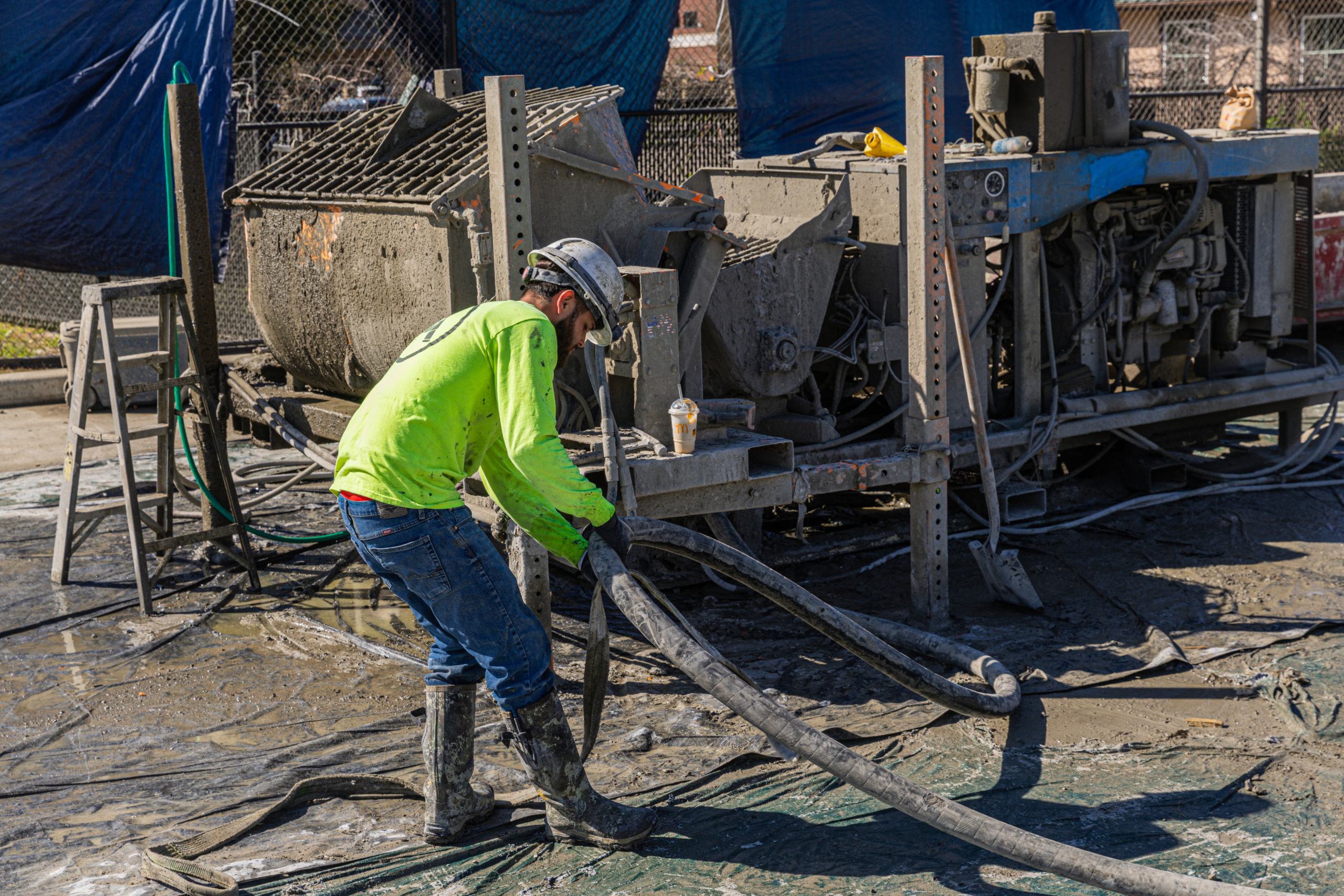
municipal large pipe relining
Cities across the country are facing a growing challenge of issues like aging sewer, stormwater, and drainage infrastructure. Many of these were installed decades (if not centuries) ago. And they are beginning to fail. Replacing these large pipelines through excavation can be extremely disruptive, requiring road closures, extensive construction, and major public inconvenience.
That’s why many municipalities are turning to municipal large pipe relining as a practical alternative. Trenchless rehabilitation methods allow contractors to restore damaged pipelines from the inside, extending their service life while avoiding the cost and disruption of traditional excavation.
Why Municipal Large Pipe Relining?
Cities face a difficult balancing act when it comes to infrastructure management. Pipes that carry stormwater, wastewater, and drinking water are often buried beneath busy roads, buildings, and public spaces. Excavating these systems can create significant logistical challenges.
Relining technologies solve many of these problems by repairing pipes internally.
Municipalities often choose trenchless relining because it offers several key advantages:
- Minimal surface disruption: Roads, sidewalks, and landscaping remain intact because excavation is rarely required.
- Lower project costs: Relining can often be completed at a fraction of the cost of full pipe replacement.
- Faster completion times: Projects can often be finished in days rather than weeks.
- Extended pipeline lifespan: Modern lining systems can add 50 years or more to the life of a pipeline.
- Reduced risk of structural collapse: Relining restores structural integrity without removing the original pipe.
Large-diameter pipelines are especially suited to trenchless rehabilitation because replacing them through open excavation could involve extensive demolition and long-term traffic closures. Pipes measuring several feet in diameter often run beneath critical infrastructure, making internal restoration the most practical solution.
Trenchless Lining Technologies Used
Modern municipal pipe rehabilitation relies on several proven trenchless technologies. The best option depends on pipe diameter, structural condition, material type, and project goals.
One of the most common methods used for large infrastructure pipelines is Cured-In-Place Pipe (CIPP) lining. In this process, a flexible liner saturated with resin is inserted into the damaged pipe. Once in place, the liner is inflated and cured using heat or UV light, creating a seamless structural pipe within the original system.
The result is a durable, jointless liner that seals cracks, stops infiltration, and restores flow efficiency.
Advanced Pipe Repair frequently utilizes several complementary technologies when working with municipal systems:
- CIPP structural liners for restoring large sewer and stormwater pipelines
- Spray-In-Place Pipe (SIPP) coatings that apply polymer or cementitious materials directly to the interior of the pipe
- Robotic inspection cameras for detailed internal assessments before repairs begin
- High-pressure cleaning and descaling tools to prepare the pipe surface prior to lining
These technologies allow rehabilitation of pipelines up to 120 inches in diameter, making trenchless solutions viable even for massive municipal infrastructure.
Economic and Environmental Impact
The financial benefits of trenchless rehabilitation can be substantial for cities and utility districts.
Traditional excavation projects require heavy equipment, traffic control, road reconstruction, and restoration of landscaping or structures. When pipelines run beneath major streets or public spaces, the cost of excavation can far exceed the cost of the pipe itself.
Relining projects significantly reduce these expenses by avoiding surface disruption.
Some of the major economic advantages include:
- Reduced labor and equipment costs
- Minimal pavement replacement
- Lower traffic control and public safety expenses
- Shorter project timelines
Environmental benefits are equally important. Excavation projects generate large amounts of waste materials and emissions from heavy machinery. Trenchless repairs drastically reduce these impacts by limiting soil disturbance and preserving existing infrastructure.
By extending the service life of existing pipes rather than replacing them entirely, cities also conserve materials and reduce the environmental footprint associated with new pipe manufacturing.
Public Works Scheduling and Logistics
Another major benefit of trenchless rehabilitation is how it simplifies project logistics for municipal public works departments.
Large pipeline replacement projects can take weeks or months and often require road closures, detours, and utility shutdowns. These disruptions affect residents, businesses, and emergency services.
Relining projects can often be completed through existing access points such as manholes or vaults. This allows contractors to work underground without disturbing the surrounding area.
Municipal scheduling teams benefit from:
- Shorter construction windows
- Fewer traffic closures
- Less coordination with other utilities
- Reduced disruption to residents and businesses
Because lining systems cure relatively quickly, pipelines can typically get back into service within a relatively short period of time.
Successful City Project Case Studies
Across the country, municipalities are already seeing significant benefits from large-diameter trenchless rehabilitation.
Check out this example of a city dealing with a failing 96-inch stormwater pipeline. Excavation typically requires closing major roadways and tearing up large sections of pavement. Instead, we put in a trenchless CIPP liner through existing access points.
The results were impressive:
- The project was complete in just three days
- No substantial road closures and surface damage
- The city saved over 60% compared to traditional replacement
- Flow capacity improved due to the smooth interior liner
Projects like this demonstrate how trenchless technology can restore critical municipal infrastructure quickly while protecting surrounding communities from unnecessary disruption.
Speak to Advanced Pipe Repair for Municipal Large Pipe Relining
As cities across the country confront aging water and wastewater systems, trenchless rehabilitation is one of the most practical solutions available. Instead of excavating entire pipelines, municipalities can restore structural integrity, improve flow performance, and extend service life with modern lining technologies.
At Advanced Pipe Repair, we specialize in trenchless solutions designed for complex pipeline systems. Contact us today to discuss how we can help extend the life of your infrastructure without costly excavation or downtime.