
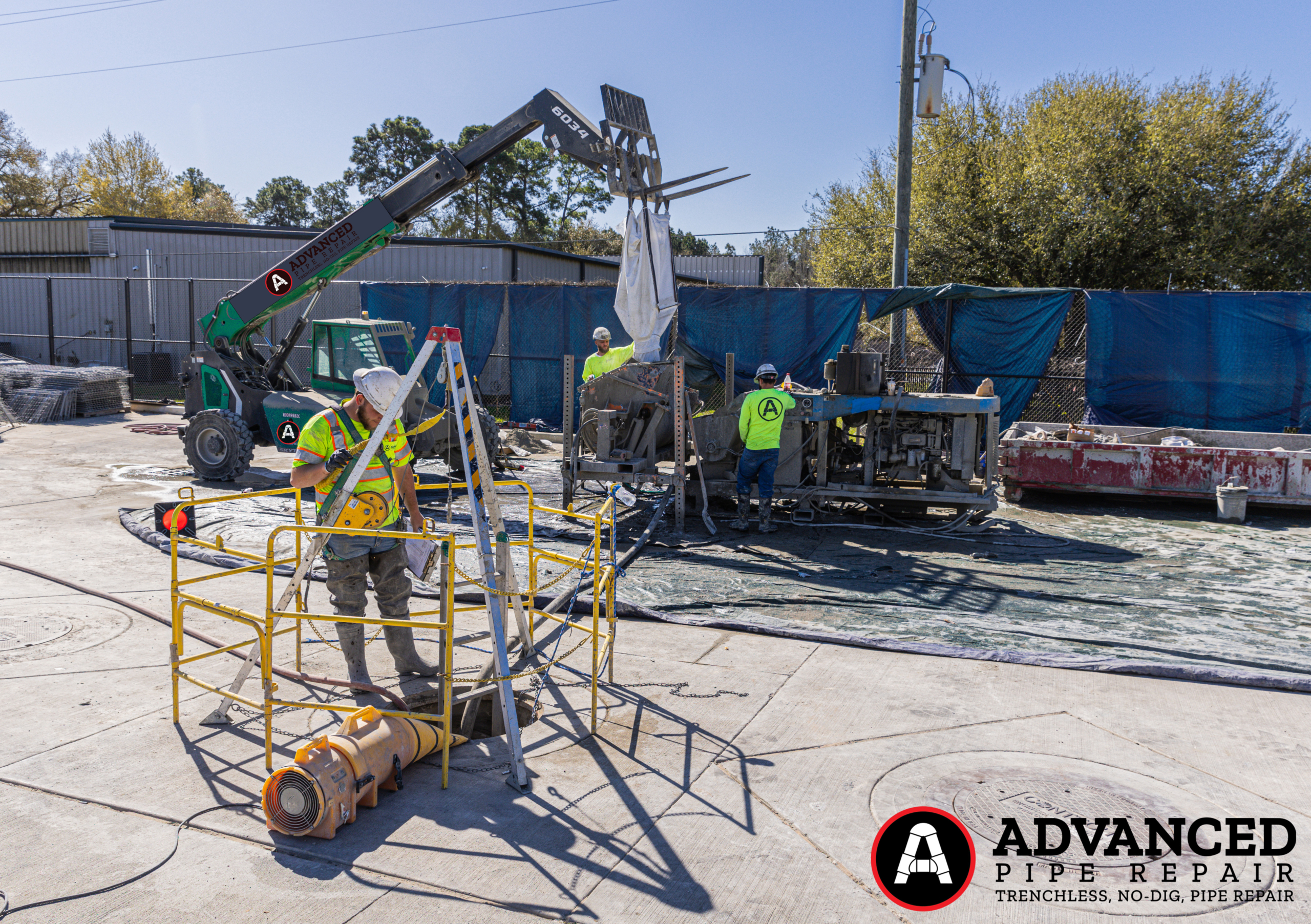
shotcrete lining for large pipelines
Aging infrastructure continues to challenge municipalities, utilities, and industrial operators responsible for maintaining large-diameter pipelines. Corrosion, material loss, and structural degradation can significantly reduce system reliability and increase the risk of failure. When full replacement is costly or impractical, shotcrete lining for large pipelines offers a proven rehabilitation method. This method restores strength, protects against further deterioration, and extends service life with minimal surface disruption.
The approach has been widely adopted in wastewater, stormwater, and industrial applications where durability and structural performance are critical.
What Is Shotcrete Lining for Large Pipelines?
Shotcrete lining involves the application of a cement-based material that is pneumatically projected onto prepared surfaces at high velocity. Once applied, the material compacts and bonds to the existing pipe wall, forming a dense, monolithic lining that becomes part of the structural system rather than a separate layer.
Unlike thin coatings or corrosion barriers, shotcrete can be designed to replace lost structural material. This makes it particularly effective for pipelines that have experienced section loss, exposed aggregate, or deterioration caused by chemical attack. The lining thickness can be adjusted based on structural requirements, allowing engineers to restore load-bearing capacity where needed.
Shotcrete is commonly used in pipelines constructed from concrete, reinforced concrete, brick, or masonry. Its ability to conform to irregular shapes and varying profiles makes it suitable for pipes with non-uniform deterioration or complex geometries.
Shotcrete is commonly applied in pipelines constructed from:
- Reinforced concrete
- Cast-in-place concrete
- Brick or masonry
- Large culverts and tunnel structures
Its versatility allows it to address a wide range of deterioration conditions within a single pipeline.
Application Process and Equipment Used
Successful shotcrete rehabilitation depends on careful planning and execution. The process typically begins with a detailed condition assessment using visual inspection, laser profiling, or other evaluation methods to identify areas of deterioration and determine required lining thickness.
Surface preparation is a critical step. The interior of the pipeline must be cleaned to remove loose material, corrosion products, biological growth, and debris. Proper preparation ensures strong bonding between the host pipe and the shotcrete lining. In areas of advanced deterioration, localized repairs or reinforcement may be completed prior to full lining application.
Shotcrete is applied using specialized pumping systems that deliver the material through hoses to a spray nozzle. Skilled nozzle operators apply the material in controlled passes, ensuring even thickness and proper compaction. Application techniques are adjusted based on pipe diameter, orientation, and access conditions. After placement, the lining is cured under controlled conditions to achieve the required strength and durability.
Ideal Pipe Types and Diameters
Shotcrete lining is especially well suited for large-diameter pipelines where other trenchless rehabilitation methods may not be feasible. Because the material is applied manually, it can accommodate a wide range of diameters, shapes, and profiles.
Common applications include:
- Large sanitary sewer interceptors
- Stormwater trunk lines
- Box culverts and arch culverts
- Industrial pipelines and conveyance tunnels
Shotcrete is often selected for pipelines that exceed the size limits of cured-in-place lining systems or where structural rehabilitation is required rather than surface protection alone. It is also advantageous in pipes with varying diameters or transitions where prefabricated liners may not fit properly.
Benefits vs. Traditional Rehabilitation or Replacement
Compared to full pipe replacement, shotcrete lining offers several practical advantages. Excavation of large pipelines often involves roadway closures, utility relocations, environmental permitting, and extensive surface restoration.
Shotcrete rehabilitation can reduce:
- Construction timelines
- Surface disruption and traffic impacts
- Environmental disturbance
- Overall project costs
In contrast to traditional repair methods that only address surface corrosion, shotcrete restores lost material and structural capacity. It can also improve hydraulic performance by creating a smoother interior surface, helping pipelines function more efficiently after rehabilitation.
Example Projects and Visual Demonstrations
Shotcrete lining has been successfully applied in a variety of large-scale infrastructure projects. In wastewater systems, it is frequently used to rehabilitate interceptors affected by hydrogen sulfide corrosion, where crown loss and sidewall deterioration are common. In stormwater applications, shotcrete has reinforced aging culverts while maintaining original flow characteristics and capacity.
Visual inspections before and after installation often show:
- Rebuilt pipe walls where concrete had eroded
- Uniform lining thickness throughout the pipe
- Improved continuity across joints and transitions
Before-and-after visual inspections often reveal dramatic improvements, including rebuilt pipe walls, uniform lining thickness, and restored structural continuity. These visual demonstrations are particularly valuable for asset owners, as they provide clear documentation of condition improvements and support long-term maintenance planning.
A Long-Term Solution for Pipeline Rehabilitation
When corrosion and structural deterioration threaten the reliability of large pipelines, selecting the right rehabilitation method is essential. Shotcrete lining for large pipelines continues to be a proven solution for restoring strength, improving durability, and extending service life without the disruption associated with full replacement.
If you’re evaluating rehabilitation options for large-diameter pipelines, Advanced Pipe Repair can help assess existing conditions and determine whether shotcrete lining is the right approach for your system. Reach out to us today to discuss your infrastructure goals and long-term maintenance strategy.