
Spray Applied Pipe Liner for Large-Diameter Pipeline Rehabilitation
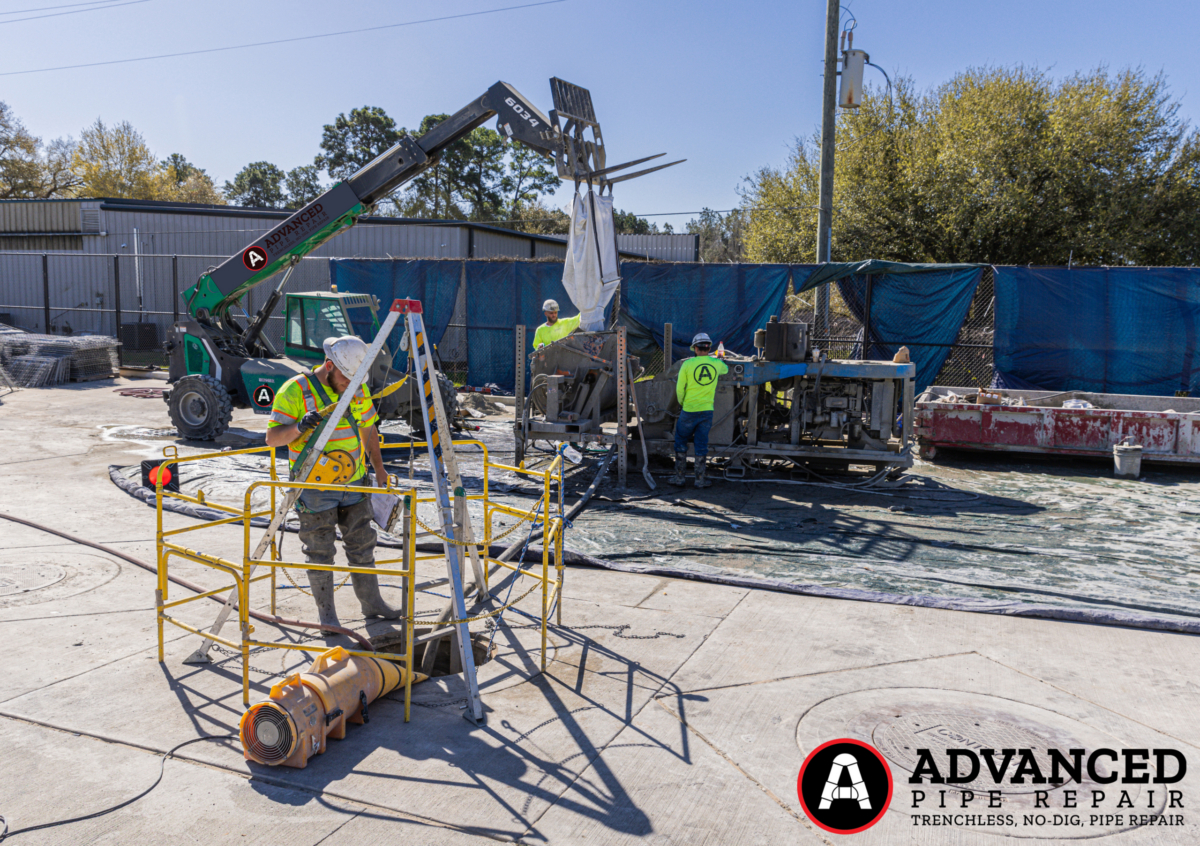
Aging pipelines do not always require extensive excavation and complete replacement. Spray Applied Pipe Liner (SAPL) provides an established trenchless method for rehabilitating large-diameter pipes while limiting disruption to roads, facilities, utilities, and surrounding property. By applying a specialized lining material directly to the prepared interior surface, SAPL creates a durable new lining within the existing host pipe.
At Advanced Pipe Repair, we bring more than 25 years of commercial pipeline and plumbing restoration experience to every project. We work with municipalities, engineers, industrial facilities, utility contractors, and other infrastructure stakeholders to evaluate pipeline conditions and develop an appropriate rehabilitation plan.
If you are responsible for a deteriorating large-diameter pipeline, contact us to request a professional assessment.
What Is a Spray Applied Pipe Liner?
SAPL is a trenchless rehabilitation method in which cementitious or polymer-based material is sprayed onto the interior wall of an existing pipeline. The material is applied at a specified thickness to renew the pipe interior and address project-specific structural or protective requirements.
The technique has been used in large-diameter pipe rehabilitation for years. As the method has matured, Spray Applied Pipe Liner has become a standardized term for this established approach. The terminology may be newer to some project stakeholders, but the underlying application method has a substantial history in pipeline restoration.
Unlike full replacement, SAPL uses the existing pipe as the pathway for the rehabilitated system. Specialized equipment travels through or applies material within the pipeline, placing the liner against the prepared host-pipe surface. Depending on the material and project design, the completed lining can protect against continued deterioration, improve the interior surface, and contribute structural reinforcement.
SAPL is not a one-size-fits-all product. Material selection, liner thickness, surface preparation, and curing requirements must reflect the condition, diameter, geometry, and operating environment of the pipeline.
When Is SAPL an Appropriate Rehabilitation Method?
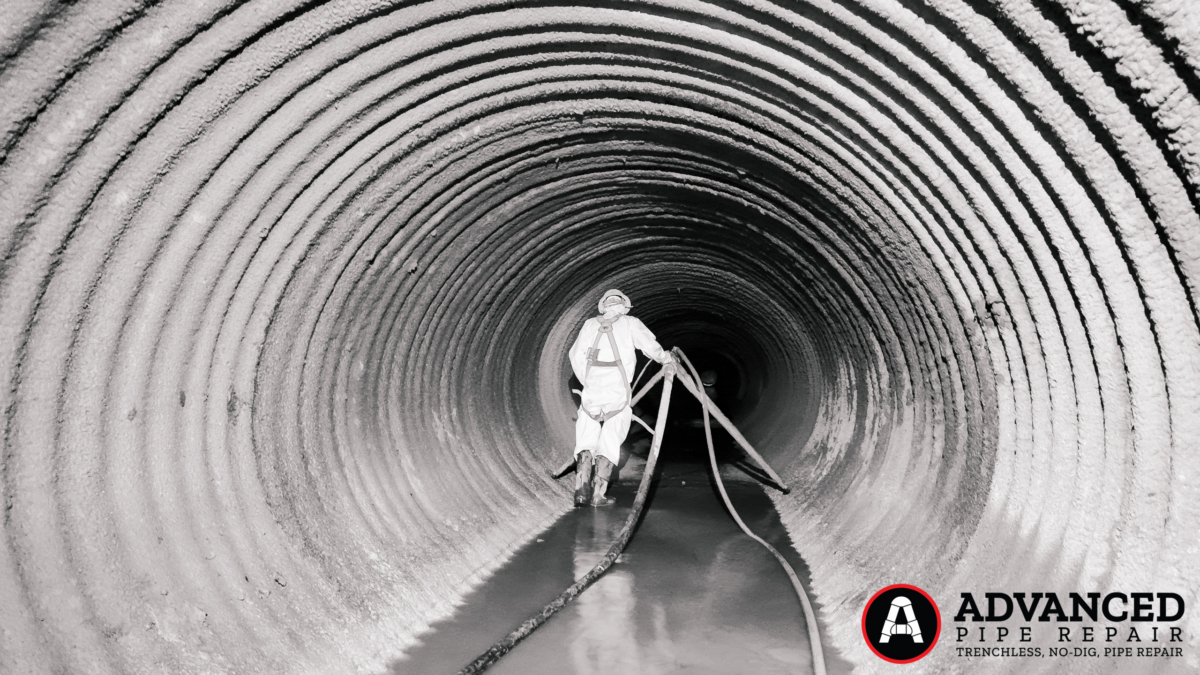
A detailed condition assessment should come before any rehabilitation recommendation. The type and severity of defects, host-pipe stability, flow requirements, access limitations and expected service conditions all influence whether spray-applied rehabilitation is appropriate.
SAPL may be considered for pipelines affected by:
- Corrosion or interior surface deterioration
- Abrasion, erosion, or material loss
- Infiltration through joints or defects
- Cracks and other structural concerns
- Rough interior surfaces that restrict flow
- Deterioration in hard-to-excavate locations
- Aging infrastructure that requires service-life extension
The technique is particularly valuable when a large pipe runs beneath a roadway, active facility, developed property, or environmentally sensitive area. Excavating these locations may require traffic closures, extensive restoration, utility coordination, or operational shutdowns. A trenchless approach can substantially reduce those complications.
However, some pipelines are too collapsed, misaligned, or unstable for lining. Our responsibility is to identify the actual condition of the system and determine whether SAPL, another rehabilitation method, or replacement is the appropriate solution.
Benefits of SAPL for Large-Diameter Pipes
Large-diameter pipeline replacement can become a major civil construction project. It may involve extensive excavation, bypass pumping, road closures, soil management, and restoration of pavement or developed surfaces. SAPL addresses deterioration from inside the existing pipeline, reducing the amount of surface access typically required.
Reduced Excavation and Surface Disruption
Because the host pipe remains in place, crews can often access the system through existing structures or strategically selected entry points. This helps limit disturbance to traffic, business operations, landscaping, and adjacent utilities. It may also reduce the restoration work required after rehabilitation.
Adaptability to Different Pipe Profiles
Large infrastructure pipes are not always perfectly round. Some have oval, arched, or irregular cross-sections that make other rehabilitation methods difficult to install. Spray application allows the lining material to follow the contours of the prepared surface, making SAPL adaptable to varied geometries.
Corrosion and Deterioration Protection
The completed liner creates a barrier between the flow and the existing pipe wall. Depending on the material selected, it can protect the host pipe from conditions that contribute to corrosion, abrasion, and continuing material loss.
Improved Interior Surface
Years of corrosion, scaling, and deterioration can leave a pipeline interior rough and irregular. Proper cleaning followed by a consistent lining application creates a smoother surface. Hydraulic performance depends on the pipe design, liner thickness, and operating conditions, but restoring the interior may improve flow characteristics.
Potential Cost and Scheduling Advantages
Avoiding extensive excavation can reduce several costs associated with replacement, including surface demolition, hauling, traffic control, and reconstruction. SAPL installation may also be completed more efficiently than conventional replacement. Actual savings and schedules depend on access, pipe condition, preparation requirements, and project scope.
Our Spray Applied Pipe Liner Process
Successful rehabilitation depends on much more than spraying material into a pipe. Inspection, cleaning, surface preparation, application control, and final verification all affect long-term performance. We approach each project through a structured process.
1. Inspection and Condition Assessment
We begin by gathering available pipeline information and inspecting the interior. Video camera inspection helps document corrosion, debris, cracks, joint conditions, infiltration, and other visible defects. We also evaluate pipe dimensions, geometry, access points, and operational considerations.
This information supports the project scope and helps determine whether the pipeline is a suitable candidate for SAPL.
2. Cleaning and Surface Preparation
The lining must bond to the host-pipe surface, making preparation one of the most important phases. Deposits, sediment, corrosion products, loose material, and other contaminants must be removed. Depending on the pipeline, cleaning may involve high-pressure water, mechanical equipment, or a combination of methods.
After cleaning, the pipe is inspected again to confirm its condition and determine whether additional preparation is necessary.
3. Liner Design and Project Planning
Material type and thickness are selected according to the pipe condition and performance requirements. Planning also addresses access, flow control, ventilation, application equipment, curing conditions, and quality-control procedures. For municipal, industrial, and engineered projects, we coordinate with the appropriate stakeholders to ensure the installation plan reflects specifications and site requirements.
4. Controlled Spray Application
Specialized equipment applies the lining material directly to the pipe interior. The material is placed in controlled passes to achieve uniform coverage and the specified thickness. The application process can follow round, oval, and irregular profiles while addressing changes in the host-pipe surface.
Technicians monitor the equipment and material placement throughout the installation. Careful control is essential for producing a continuous liner that meets project requirements.
5. Curing and Quality Control
The liner must cure according to the selected material’s requirements before the pipeline returns to service. Environmental conditions, material characteristics, and applied thickness can all influence curing time. Quality-control procedures verify the completed application. This may include thickness checks, material documentation, and visual inspection to confirm coverage and identify any areas requiring attention.
6. Final Inspection and Project Documentation
Once curing is complete, we perform a final inspection of the rehabilitated pipeline. The finished work is documented so owners, engineers, and project managers can review the condition of the installed liner. The system can then be returned to service according to the approved project plan.
SAPL Applications Across Critical Infrastructure
SAPL can be used in urban, industrial, and remote environments where large-diameter infrastructure must remain reliable. Common applications include:
- Stormwater pipelines
- Sanitary sewers
- Culverts
- Wastewater systems
- Other municipal or industrial piping
The method can accommodate several pipe sizes, materials, and profiles, but suitability must always be confirmed through inspection. Our capabilities include pipelines ranging from relatively small diameters to large infrastructure measuring up to 120 inches, allowing us to evaluate a broad range of rehabilitation needs.
SAPL Versus Full Pipe Replacement
SAPL and excavation-based replacement can both play an important role in infrastructure management. The correct choice depends on the host pipe, site conditions, performance requirements, and long-term project objectives.
| Project Consideration | SAPL Rehabilitation | Full Pipe Replacement |
|---|---|---|
| Existing pipeline | Remains in place and receives a new interior lining | Is removed, abandoned, or replaced |
| Excavation | Generally limited to necessary access | Often requires an open trench |
| Surface impact | Reduced in many applications | May require extensive demolition and restoration |
| Pipe geometry | Can follow round, oval, or irregular profiles | Limited to available manufactured pipe configurations |
| Surrounding utilities | Less exposure from excavation | May require extensive locating and coordination |
| Project scope | Driven by condition assessment and liner design | Driven by removal, installation, and reconstruction needs |
Replacement may be necessary when a pipe has collapsed, lost alignment, or cannot support the proposed rehabilitation process. SAPL is most valuable when the existing pipeline can be renewed effectively and excavation would add unnecessary cost, risk, or disruption.
Discuss Your Pipeline Rehabilitation Needs with Our Team
Spray Applied Pipe Liner offers an established way to rehabilitate suitable large-diameter pipelines while reducing the excavation, surface disruption, and operational complications associated with conventional replacement. Achieving the intended result requires proper assessment, material selection, preparation, application, and inspection.
At Advanced Pipe Repair, we bring more than 25 years of experience to complex pipeline rehabilitation projects. We will evaluate your infrastructure, explain the available options, and help develop a practical scope of work. Contact us today to discuss your pipeline, schedule an assessment, or request a no-obligation quote.
FAQs
Is SAPL the same as large-diameter pipe lining?
SAPL is the standardized term for a spray-applied technique that has long been used in large-diameter pipeline rehabilitation. It describes the method of applying a lining material directly to the interior surface of a prepared host pipe. The terminology helps distinguish the technique from other trenchless methods like cured-in-place pipe lining.
What pipe materials and shapes can receive a spray-applied liner?
SAPL can be considered for several host-pipe materials and configurations, including round, oval, and irregular profiles. Compatibility depends on the pipe’s condition, surface characteristics, operating environment, and selected lining material.
Is SAPL considered a structural repair?
A spray-applied liner may provide structural reinforcement when it is designed and installed for that purpose. Its structural contribution depends on the material, engineered thickness, pipe dimensions, host-pipe condition, and project specifications.