
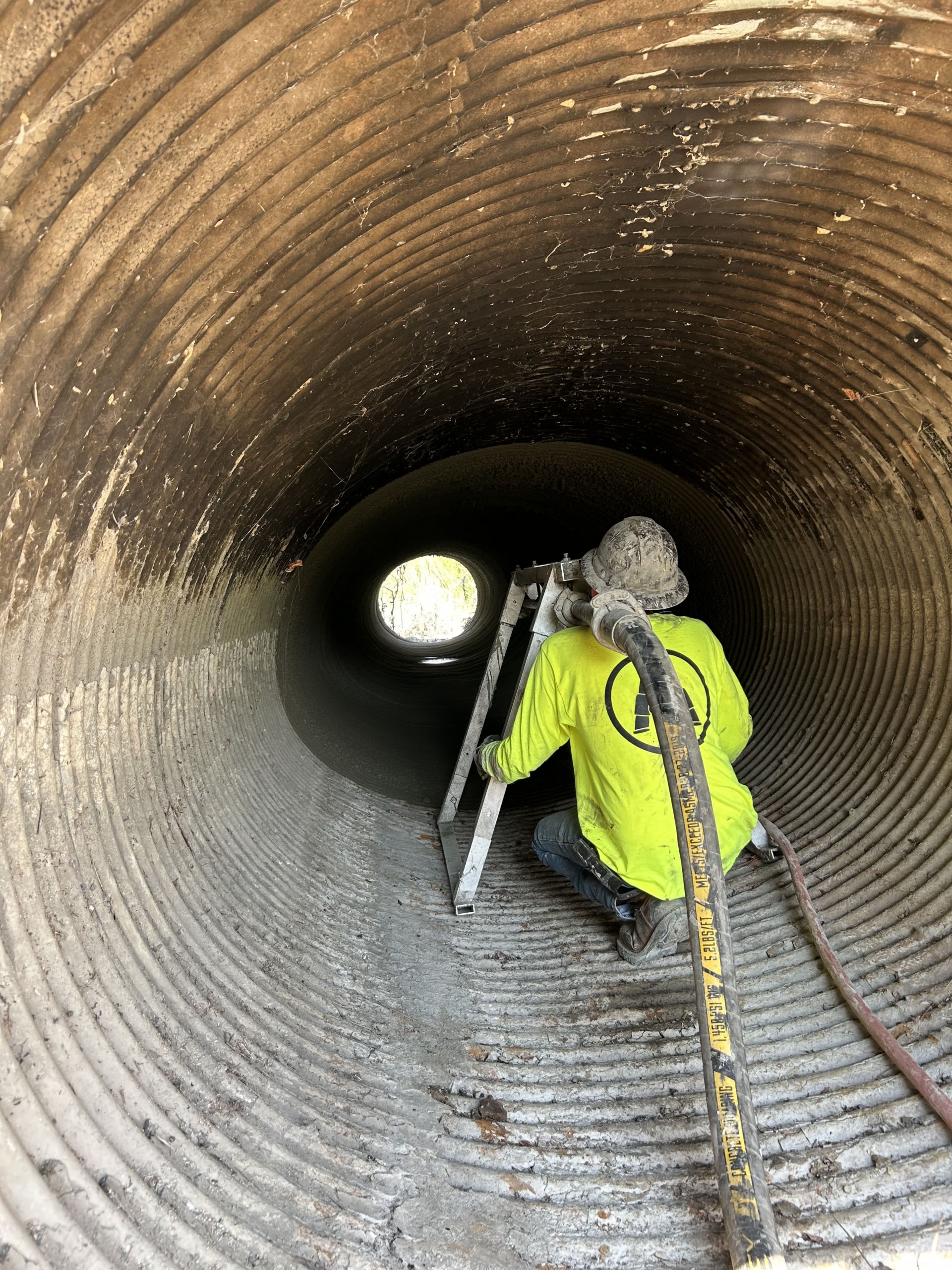
When a pipeline exceeds 60 inches in diameter, the repair strategy changes significantly. These are not routine utility lines. They are major stormwater systems, sanitary interceptors, industrial process lines, culverts, and other high-demand infrastructure assets. In many cases, they run beneath roads, facilities, rail corridors, and developed property where open excavation would be costly, disruptive, and difficult to manage. That is why trenchless pipe repair has become such an important solution for overly large systems.
Advanced Pipe Repair focuses heavily on large-diameter rehabilitation, including pipes 36 inches and larger, with experience on systems exceeding 120 inches. For infrastructure management, the value of a no-dig approach is pretty straightforward. Restore the pipe from the inside, limit disruption above ground, and extend service life without a full replacement project.
Why Pipes Over 60 Inches Require a Different Approach
Large-diameter pipelines present challenges that smaller systems do not. These assets often play a central role in municipal or industrial operations, so failure can affect safety, compliance, drainage performance, and long-term capital planning.
When a pipe of this size starts to deteriorate, the issues may include:
- Structural cracking
- Joint failure
- Infiltration or exfiltration
- Corrosion
- Surface wear and material loss
- Reduced hydraulic performance
- Localized collapse or deformation
Excavating and replacing a line of this scale is rarely the first choice. The pipe may be too deep, too long, or too closely surrounded by developed infrastructure. Surface restoration alone can turn a repair into a very expensive project. In industrial settings, excavation may also interfere with operations, access routes, and safety planning.
That is why no-dig rehabilitation is often the preferred path. Instead of removing the original pipe, the goal is to restore performance and structural integrity internally.
What No-Dig Repair Is Really Designed to Accomplish
For oversized infrastructure, repair is not just about stopping leaks. A proper rehabilitation program is meant to rebuild the system as a functioning long-term asset.
For pipes over 60 inches, the selected method usually needs to do several things well:
- Address structural deterioration, not just surface damage
- Work within existing access limitations
- Preserve as much flow capacity as possible
- Resist corrosion and wear in demanding environments
- Minimize disruption to roads, facilities, and operations
- Deliver long-term reliability
That is why contractors do not choose a method based on convenience alone. The decision depends on the pipe condition, alignment, service demands, access points, and the owner’s performance goals.
Large-Diameter CIPP as a Leading Structural Option
One of the most widely used solutions for oversized systems is large-diameter CIPP. Cured-in-place pipe creates a new pipe within the host pipe by installing a resin-saturated liner and curing it in place. Once complete, the result is a continuous, jointless internal pipe designed to restore structural performance.
For large-diameter applications, that matters because these systems often suffer from multiple deterioration points rather than one isolated defect. A structural liner can address broader deterioration without requiring the original pipe to be excavated and removed.
Why CIPP Works Well for Oversized Pipes
Large-diameter CIPP is often selected because it offers several practical and engineering advantages:
- Creates a continuous internal pipe
- Reduces joints and infiltration pathways
- Can restore structural integrity
- Avoids continuous excavation
- Works well where access is limited
- Minimizes disruption to traffic and facilities
- Supports long-term rehabilitation planning
For many municipalities and industrial owners, this makes CIPP one of the most effective large-diameter trenchless pipe repair solutions available.
What the Rehabilitation Process Typically Looks Like
Even though the process avoids excavation, large-diameter rehabilitation is still highly technical. The work has to be carefully planned and executed in stages.
A typical process may include the following:
- Condition Assessment: The contractor inspects the line to identify cracking, corrosion, infiltration, joint failures, and structural deficiencies.
- Cleaning and Preparation: Debris, deposits, sediment, and other obstructions are removed so the rehabilitation system can be installed properly.
- Engineering Review: The repair method is selected based on pipe size, host pipe condition, access, load conditions, and hydraulic needs.
- Installation: The liner or rehabilitation material is placed inside the pipe using the method chosen for the project.
- Curing or Finalization: If CIPP is used, the liner is cured to form the new internal structure.
- Post-Installation Inspection: The completed repair is reviewed to verify quality, integrity, and proper system restoration.
This process is especially important in oversized systems because installation errors, poor prep work, or insufficient design can create major performance problems later.
Comparing Large-Diameter Pipe Trenchless Pipe Repair
Not every oversized pipe should be repaired the same way. Different methods serve different conditions, and some are more structural than others.
| Method | How It Works | Best Use Case | Main Limitation |
|---|---|---|---|
| CIPP | Installs and cures a structural liner inside the host pipe | Pipes needing broad structural renewal with minimal excavation | Requires detailed engineering and proper host pipe evaluation |
| Slip Lining | Inserts a smaller pipe into the existing pipe | Long, straight runs where some diameter reduction is acceptable | Reduces internal diameter and may affect flow |
| Localized Repairs | Targets specific defects instead of lining the full pipe | Isolated failures or limited damage areas | Not ideal when deterioration is widespread |
| Coatings or Relining Systems | Applies protective or restorative materials internally | Pipes with surface deterioration or corrosion concerns | May not provide the same structural solution as full lining methods |
This is where large-diameter pipe rehabilitation methods have to be matched carefully to the condition of the asset. A lighter approach may work for isolated issues, but severe deterioration often requires a full structural strategy.
Slip Lining and When It Makes Sense
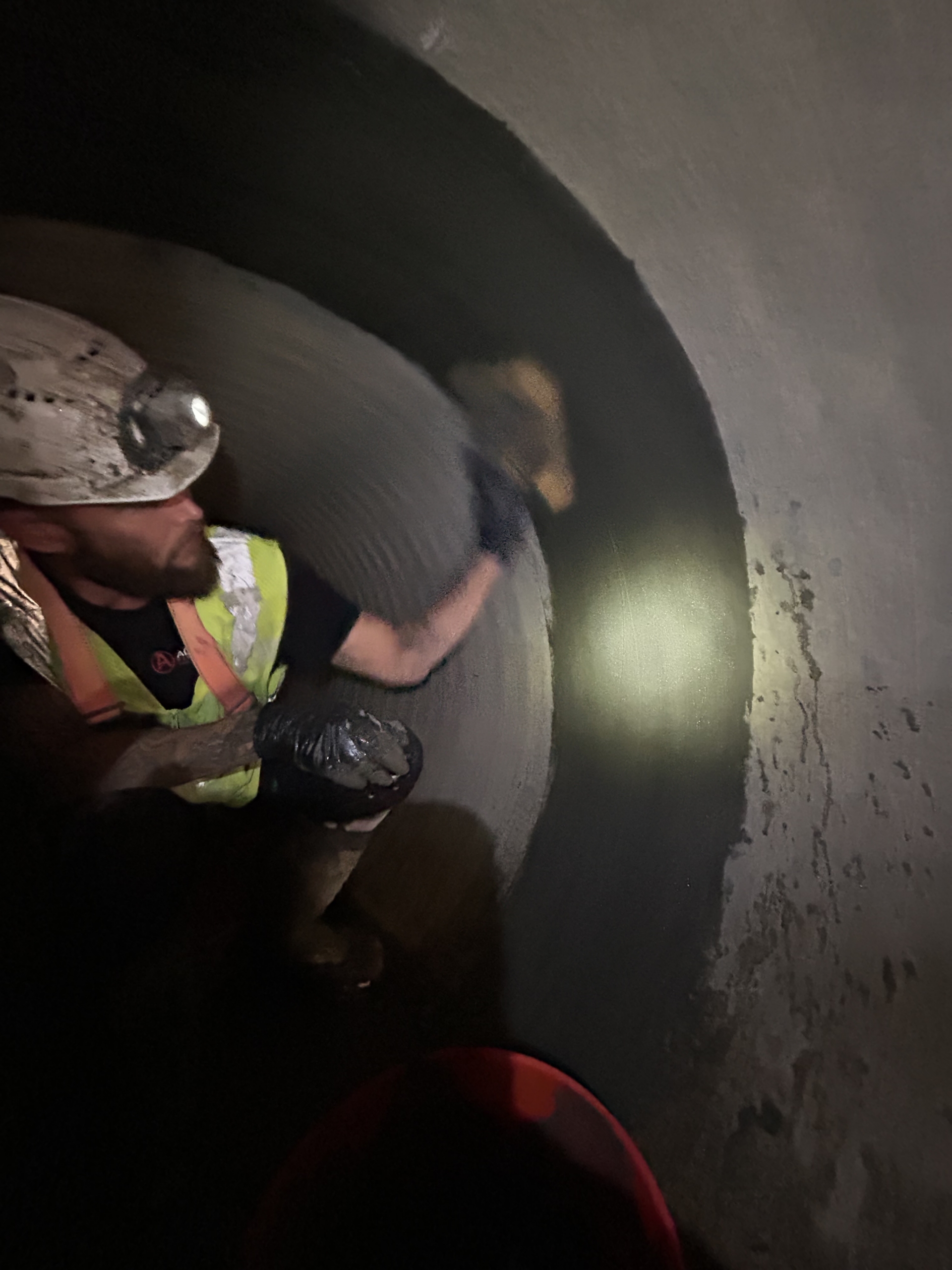
Slip lining remains a useful method in certain oversized pipe projects. It works by inserting a new pipe inside the existing one and filling the annular space as needed. For long, straight runs, it can be an efficient rehabilitation option.
However, the tradeoff is important: slip lining reduces the internal diameter of the original pipe. In some systems that may be acceptable, but in others it can create hydraulic concerns that rule it out.
Slip lining may be a fit when:
- The pipeline is relatively straight
- The host pipe geometry supports installation
- Flow capacity allows for diameter loss
- A full structural solution is still needed
- Site conditions make excavation undesirable
For oversized infrastructure, hydraulic calculations are especially important before this method is selected.
Industrial Pipe Rehabilitation and Why It Is a Separate Conversation
Many oversized pipelines are found in municipal systems, but a major portion also exists in private and industrial environments. That is where industrial pipe rehabilitation becomes especially important.
Industrial systems may include:
- Process piping
- Plant drainage systems
- Wastewater conveyance lines
- Refinery infrastructure
- Chemical plant piping
- Brewery and distillery systems
- HVAC-related piping networks
These environments often add another layer of complexity because the line may be exposed to corrosion, chemical attack, abrasive flow, temperature variation, or operational downtime pressures.
In industrial settings, the rehabilitation plan often needs to balance:
- Structural performance
- Material compatibility
- Access limitations
- Operational continuity
- Safety requirements
- Downtime reduction
That is one reason oversized industrial work has to be approached with strong engineering discipline. The pipe may be physically large, but the operating constraints are often just as important as the diameter.
Key Technical Factors That Shape the Repair Strategy
Before selecting a no-dig solution, the contractor needs to evaluate several technical issues. Pipes over 60 inches are too important and too complex for guesswork.
Some of the most important design questions include:
- Is the host pipe still stable enough for internal rehabilitation?
- How extensive is the structural deterioration?
- Does the owner need a full structural renewal or a targeted repair?
- Will the repaired pipe maintain adequate flow capacity?
- Are there access points available for installation?
- What loads must the rehabilitated pipe withstand?
- What environmental or operational conditions affect material selection?
These factors determine whether CIPP, slip lining, localized repairs, or another solution makes the most sense.
Why No-Dig Repair Often Wins Over Excavation
When large-diameter pipelines fail, owners are not just comparing repair methods. They are also comparing the broader impact of construction. On oversized systems, excavation often creates problems far beyond the pipe itself.
Common Advantages of No-Dig Repair
- Less disruption to roads, sites, and surrounding infrastructure
- Reduced surface restoration requirements
- Faster overall construction in many cases
- Lower impact on traffic and facility operations
- Better fit for deep or hard-to-access pipelines
- Ability to rehabilitate critical systems without full removal
For municipal owners, this can mean less public disruption and less restoration expense. For industrial owners, it can mean less downtime and fewer conflicts with active operations.
That combination is why trenchless methods are often the preferred strategy for oversized infrastructure renewal.
Trust Advanced Pipe Repair for Trenchless Pipe Repair
Pipes over 60 inches can absolutely be repaired without excavation, but the method has to match the condition and function of the system. In many cases, the best approach is an internal rehabilitation method that restores performance from within the host pipe rather than removing the line entirely.
The appeal is clear with less disruption, less restoration, and a better way to extend the life of critical assets. When the pipe is too important and the surroundings are too complex for open-cut replacement, trenchless pipe repair provides a practical and technically sound path forward.
At Advanced Pipe Repair, we work closely with our customers to assess pipe conditions, recommend the right solution, and complete projects with minimal disruption. Contact us today to discuss your project and find the most effective path forward.