
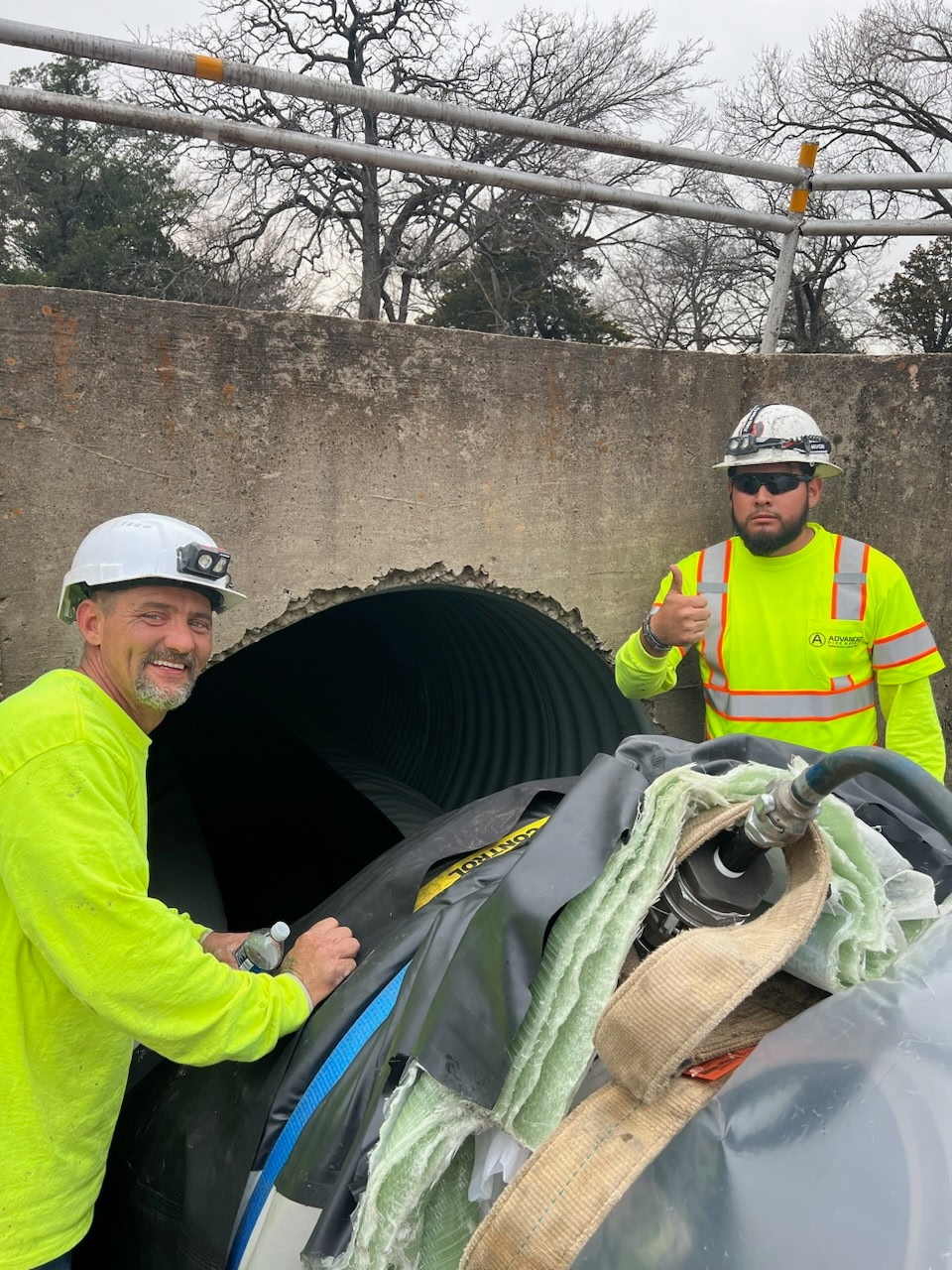
Pipeline rehabilitation is no longer limited to large excavation projects that tear through roads, landscaping, parking lots, and operating facilities. Modern rehabilitation technologies now allow many damaged pipelines to be restored internally with minimal surface disruption. For municipalities, industrial facilities, commercial properties, and utility operators, the decision often comes down to evaluating trenchless vs open cut pipe repair and determining which method best fits the pipeline condition, location, and operational demands.
Both approaches still play an important role in infrastructure rehabilitation. However, trenchless methods have become increasingly valuable for projects where excavation would create excessive disruption, cost, or operational risk.
Understanding the Difference Between Repair Methods
Open-cut excavation is the traditional approach to pipeline replacement. Crews excavate the ground above the damaged pipe, remove the failed section, install new pipe, and then restore the surrounding area.
This method can be highly effective when pipelines have completely collapsed, lost structural integrity, or require upsizing. However, excavation often brings major secondary impacts that extend far beyond the pipe itself.
Trenchless rehabilitation approaches instead focus on restoring or replacing pipelines internally through existing access points such as manholes, vaults, or limited excavation areas. One of the most common methods is cured-in-place pipe lining, which creates a new structural liner within the existing host pipe.
Modern trenchless pipe repair technologies are now used across municipal, industrial, stormwater, and commercial infrastructure systems where minimizing disruption is a major priority.
When Trenchless Methods Offer a Major Advantage
There are many situations where trenchless rehabilitation provides operational and financial advantages over excavation.
Urban Infrastructure Environments
Pipelines located beneath busy roadways, intersections, sidewalks, rail corridors, or developed commercial areas are often strong candidates for trenchless rehabilitation.
Excavation in dense urban settings may involve:
- Traffic control plans
- Concrete demolition
- Utility conflicts
- Lane closures
- Pedestrian disruptions
- Surface restoration
- Extended permitting requirements
In these environments, trenchless pipe repair can often significantly reduce restoration work and project complexity. Instead of opening long sections of pavement, rehabilitation crews may only need limited access points to complete the repair.
Active Commercial and Industrial Facilities
Industrial processing plants, manufacturing facilities, hospitals, campuses, and distribution centers frequently cannot tolerate extensive operational downtime.
Excavation projects inside active facilities may interfere with:
- Vehicle access
- Production operations
- Safety protocols
- Underground utilities
- Drainage systems
- Environmental controls
Trenchless rehabilitation allows many systems to remain operational during portions of the repair process while reducing the physical footprint of construction activities.
This becomes especially important when pipelines are located beneath structures, equipment pads, loading areas, or high-traffic operational zones.
Deep or Difficult-to-Access Pipelines
Some pipelines are buried at depths where excavation becomes increasingly expensive and logistically challenging. Deep sewer interceptors, stormwater systems, and industrial process lines may require:
- Extensive shoring
- Dewatering
- Large excavation equipment
- Utility relocation
- Environmental controls
In many cases, trenchless rehabilitation can restore these systems without exposing the entire pipeline.
Why Large-Diameter Infrastructure Changes the Conversation
The decision becomes even more important for large municipal and industrial systems. Large-diameter trenchless pipe repair has expanded significantly in recent years because excavation costs increase dramatically as pipe diameters and project depths grow larger.
Large-diameter systems often serve critical infrastructure applications such as:
- Municipal wastewater systems
- Stormwater conveyance systems
- Culverts
- Industrial processing facilities
- Transportation drainage systems
- Utility corridors
Excavating these systems may require massive restoration efforts, long project durations, and substantial operational coordination.
Modern rehabilitation methods including CIPP, spray-applied liners, and other engineered systems allow many large-diameter pipelines to be structurally restored internally instead. Our rehabilitation systems are designed for pipelines up to 120 inches in diameter.
Cost Is More Complicated Than Many Expect
One of the biggest misconceptions surrounding rehabilitation projects involves pricing comparisons. The cost of trenchless pipe repair is not always lower than excavation when looking strictly at the pipe installation itself. However, focusing only on installation cost often overlooks the larger financial picture.
Open-cut excavation may introduce secondary expenses such as:
- Asphalt restoration
- Concrete replacement
- Landscaping repair
- Traffic management
- Facility downtime
- Environmental mitigation
- Utility relocation
- Extended labor durations
For heavily developed sites, those restoration costs can become a major portion of the total project budget. By reducing surface disruption, trenchless rehabilitation may lower overall lifecycle and restoration expenses even when the rehabilitation technology itself involves specialized equipment and materials.
The cost of trenchless pipe repair also depends heavily on pipeline diameter, access conditions, bypass requirements, liner design, and curing methods.
Situations Where Excavation Still Makes More Sense
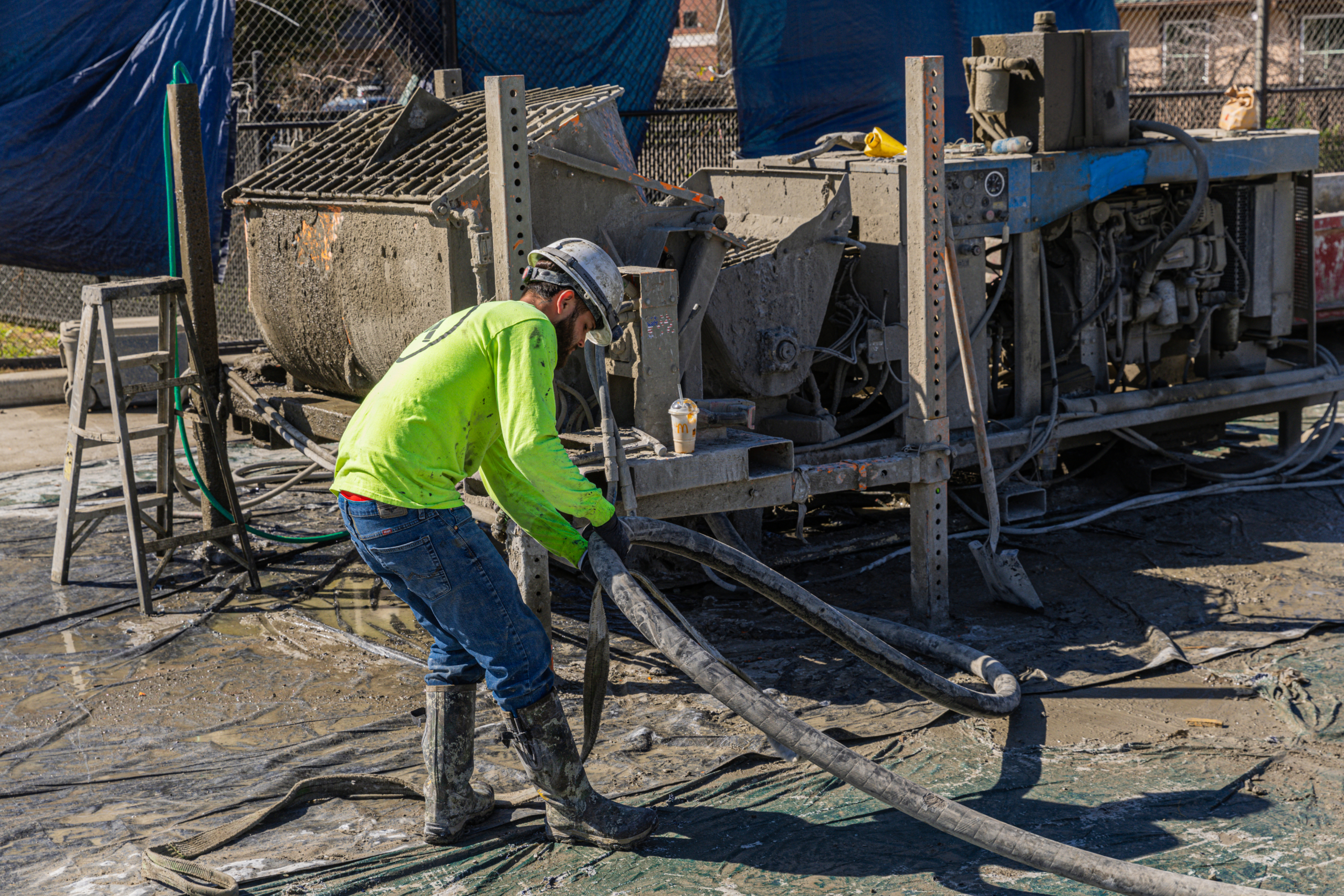
Despite the advantages of trenchless rehabilitation, excavation is still necessary in certain conditions. Open-cut replacement may remain the better option when pipelines have:
- Complete structural collapse
- Severe deformation
- Major alignment failure
- Significant diameter changes
- Extensive offset joints
- Insufficient structural host pipe integrity
Excavation may also be necessary if system redesign or increased capacity is required. For example, a municipality replacing undersized stormwater infrastructure may need to install entirely new pipe sizes rather than rehabilitate existing systems. Similarly, pipelines with multiple failed connections, extensive branching, or inaccessible conditions may not be ideal candidates for lining technologies.
Choosing the correct repair strategy requires detailed inspection and engineering evaluation rather than assuming one method fits every situation.
Comparing Operational Impacts and Project Conditions
The differences between rehabilitation methods become much more noticeable when evaluating the overall project environment rather than focusing only on the pipe itself. In many infrastructure projects, surface restoration, traffic disruption, access limitations, and operational downtime can influence the decision just as much as the structural repair requirements.
| Project Factor | Trenchless Rehabilitation | Open-Cut Excavation |
|---|---|---|
| Surface Disruption | Minimal access points required | Continuous excavation along pipe path |
| Traffic Impact | Typically reduced | Often significant lane or road closures |
| Restoration Requirements | Limited restoration work | Pavement, concrete, and landscaping replacement often required |
| Access to Deep Pipelines | Frequently more manageable | Excavation complexity increases with depth |
| Facility Downtime | Often reduced | May interfere with operations for longer periods |
| Urban Environment Suitability | Highly effective in dense infrastructure areas | Can become difficult in congested corridors |
| Structural Replacement Capability | Depends on host pipe condition | Full pipe replacement possible |
| Construction Footprint | Smaller work zones | Larger staging and excavation areas |
| Environmental Disturbance | Reduced soil disruption | Greater disturbance to surrounding areas |
| Project Duration | Often shorter overall timelines | Typically longer due to excavation and restoration |
Trenchless pipe repair continues to expand across municipal and industrial infrastructure applications. In heavily developed environments, the ability to rehabilitate pipelines internally while minimizing excavation can significantly reduce operational disruption and restoration costs.
At the same time, excavation still remains necessary for certain severely deteriorated systems, especially when pipes have collapsed, shifted substantially, or require complete replacement and redesign.
Inspection and Engineering Drive the Decision
Modern rehabilitation planning begins with accurate pipeline assessment.
Before selecting a repair method, contractors and engineers typically evaluate:
- Pipe material
- Structural condition
- Diameter
- Depth
- Flow requirements
- Soil conditions
- Existing utilities
- Access limitations
- Surface restoration concerns
CCTV inspections, robotic assessment tools, and condition analysis help determine whether rehabilitation is structurally viable. For large infrastructure systems, engineered liner design becomes especially important. Large-diameter trenchless pipe repair projects often require highly customized rehabilitation approaches based on loading conditions, flow demands, and long-term performance requirements.
Surface Restoration Is Often a Hidden Cost Driver
One of the most overlooked aspects of excavation projects is what happens after the pipe work is complete.
In many urban and commercial environments, restoring the surrounding infrastructure can become one of the most expensive portions of the project. Excavation beneath roads, parking lots, sidewalks, landscaped areas, or concrete structures frequently creates secondary restoration requirements that extend well beyond the pipe repair itself.
Depending on the site, restoration work may include:
- Asphalt replacement
- Concrete reconstruction
- Sidewalk restoration
- Curb replacement
- Landscaping repair
- Drainage reconstruction
- Pavement striping
- Erosion control measures
For municipalities and facility owners, these secondary repairs can significantly increase total project duration and cost. This is one reason trenchless pipe repair methods are often evaluated not only for installation efficiency, but also for their ability to reduce restoration demands in highly developed environments.
How Environmental and Access Conditions Affect Repair Selection
In many infrastructure projects, the surrounding environment has as much influence on repair selection as the pipe itself. A structurally damaged line beneath an open field creates a very different construction scenario than a deteriorated sewer interceptor beneath a highway, rail corridor, or active industrial facility.
Access restrictions often become one of the biggest deciding factors. Excavation in congested urban areas may require lane closures, utility coordination, traffic rerouting, pavement demolition, and extensive surface restoration once repairs are complete. In industrial environments, excavation can interfere with loading areas, process systems, storm drainage networks, and daily operations.
Depth also changes project complexity quickly. As pipelines get deeper, excavation requires additional shoring, larger equipment, dewatering systems, and more extensive safety controls. This is especially important for interceptor sewers, stormwater systems, and older municipal infrastructure installed well below grade.
Environmental conditions further complicate open excavation work. High groundwater tables may require continuous dewatering, while unstable soil conditions can create trench stability concerns that extend project durations and increase construction risk.