
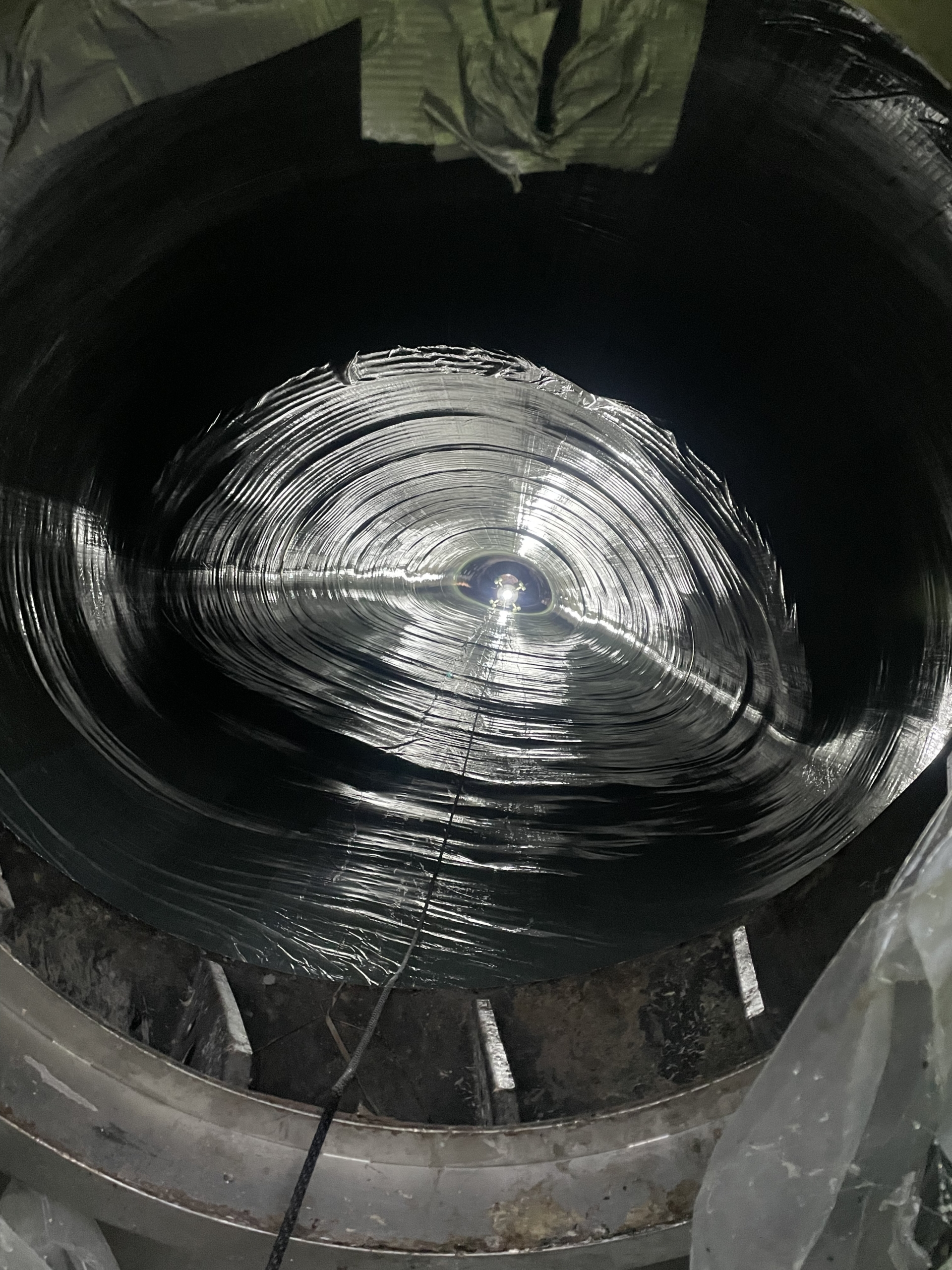
trenchless vs open-cut pipe replacement
When evaluating trenchless vs open-cut pipe replacement, project stakeholders must look beyond the initial construction cost. Municipal agencies, industrial facilities, commercial property owners, and consulting engineers are often balancing competing priorities that include regulatory compliance, public disruption, construction schedules, environmental impacts, long-term asset performance, and overall project risk. The most appropriate rehabilitation strategy depends on the condition of the existing pipeline, site constraints, utility conflicts, and lifecycle objectives rather than a single factor such as installation price.
Understanding the technical differences between rehabilitation methods allows owners and engineers to make informed decisions that align with project specifications and long-term infrastructure management goals.
Understanding the Two Rehabilitation Approaches
Although both methods restore pipeline functionality, they accomplish that goal in fundamentally different ways.
- Trenchless pipe replacement relies on limited access points rather than continuous excavation. Depending on the condition of the existing infrastructure and project requirements, rehabilitation may involve cured-in-place pipe (CIPP), pipe bursting, slip lining, or other engineered methods that minimize surface disturbance while restoring structural integrity.
- Open-cut pipe replacement requires excavation along the pipeline alignment so the existing pipe can be removed and replaced with new materials. Once installation is complete, the surrounding area must be backfilled, compacted, and restored to its previous condition.
Each method has advantages under the right circumstances, making project-specific evaluation essential.
Factors That Influence Method Selection
Selecting an appropriate rehabilitation strategy requires engineers to evaluate numerous technical considerations before construction begins.
Some of the most important variables include:
- Existing pipe material
- Diameter and length
- Structural condition
- Soil characteristics
- Groundwater conditions
- Utility congestion
- Surface infrastructure
- Traffic impacts
- Environmental permitting requirements
- Required service life
A deteriorated gravity sewer beneath a busy roadway presents very different design challenges than a damaged industrial process line located within a controlled facility. The surrounding environment often influences the preferred rehabilitation approach as much as the condition of the pipeline itself.
Trenchless vs Open-Cut Pipe Replacement: Cost, Time & Risk
While project budgets frequently drive early discussions, experienced engineers recognize that installation cost represents only one component of the total project investment.
Construction Costs
Open excavation may appear less expensive when considering only material and installation costs. However, direct construction expenses rarely represent the total financial impact of a project.
Additional costs commonly include:
- Pavement removal and replacement
- Sidewalk restoration
- Landscaping reconstruction
- Traffic control
- Utility relocations
- Dewatering operations
- Environmental mitigation
- Site restoration
- Extended project administration
These indirect expenses can substantially increase the overall project cost, particularly in developed commercial areas or urban infrastructure corridors.
Trenchless rehabilitation often reduces many of these secondary costs because excavation is limited to access pits rather than the full pipeline alignment. Although specialized equipment and materials may increase installation costs, reduced restoration requirements frequently offset much of that investment.
Project teams should evaluate total installed cost rather than comparing construction bids alone.
Schedule Considerations
Construction duration directly affects public inconvenience, operational downtime, contractor mobilization costs, and overall project risk.
Open excavation typically requires multiple sequential activities including:
- Utility locating
- Excavation
- Shoring
- Pipe removal
- Bedding preparation
- Pipe installation
- Backfilling
- Compaction
- Surface restoration
- Final paving or landscaping
Each phase introduces opportunities for weather delays, unforeseen utility conflicts, or geotechnical complications.
Many rehabilitation methods significantly shorten active construction because crews avoid continuous excavation. Reduced restoration work can also compress the overall project schedule, particularly when roadway reconstruction or concrete replacement would otherwise extend completion.
For industrial facilities, shorter construction windows may translate into reduced production interruptions and lower operational risk.
Evaluating Overall Project Risk
Infrastructure owners increasingly evaluate projects through a comprehensive risk management framework rather than focusing solely on construction costs.
Potential project risks include:
- Damage to adjacent utilities
- Ground settlement
- Traffic disruption
- Environmental impacts
- Public safety concerns
- Construction delays
- Unexpected subsurface conditions
- Permit compliance
- Restoration quality
Excavation exposes crews to many of these variables because underground conditions cannot always be fully verified during design.
Minimizing excavation often reduces the likelihood of encountering unforeseen conflicts with existing utilities, transportation infrastructure, or nearby structures.
However, successful rehabilitation still depends on accurate condition assessment before installation begins.
The Importance of Comprehensive Inspection
Every rehabilitation strategy should begin with detailed pipeline evaluation.
Closed-circuit television (CCTV) inspections provide valuable information regarding:
- Crack patterns
- Joint separation
- Root intrusion
- Corrosion
- Infiltration
- Offset joints
- Pipe deformation
- Structural deterioration
Inspection findings allow engineers to determine whether rehabilitation remains feasible or whether full replacement becomes necessary.
At Advanced Pipe Repair, we perform comprehensive pipeline inspections that help owners understand the actual condition of their infrastructure before selecting a rehabilitation strategy. Our experience with commercial, industrial, and municipal systems allows us to recommend practical solutions based on engineering requirements rather than assumptions.
Matching the Method to the Infrastructure
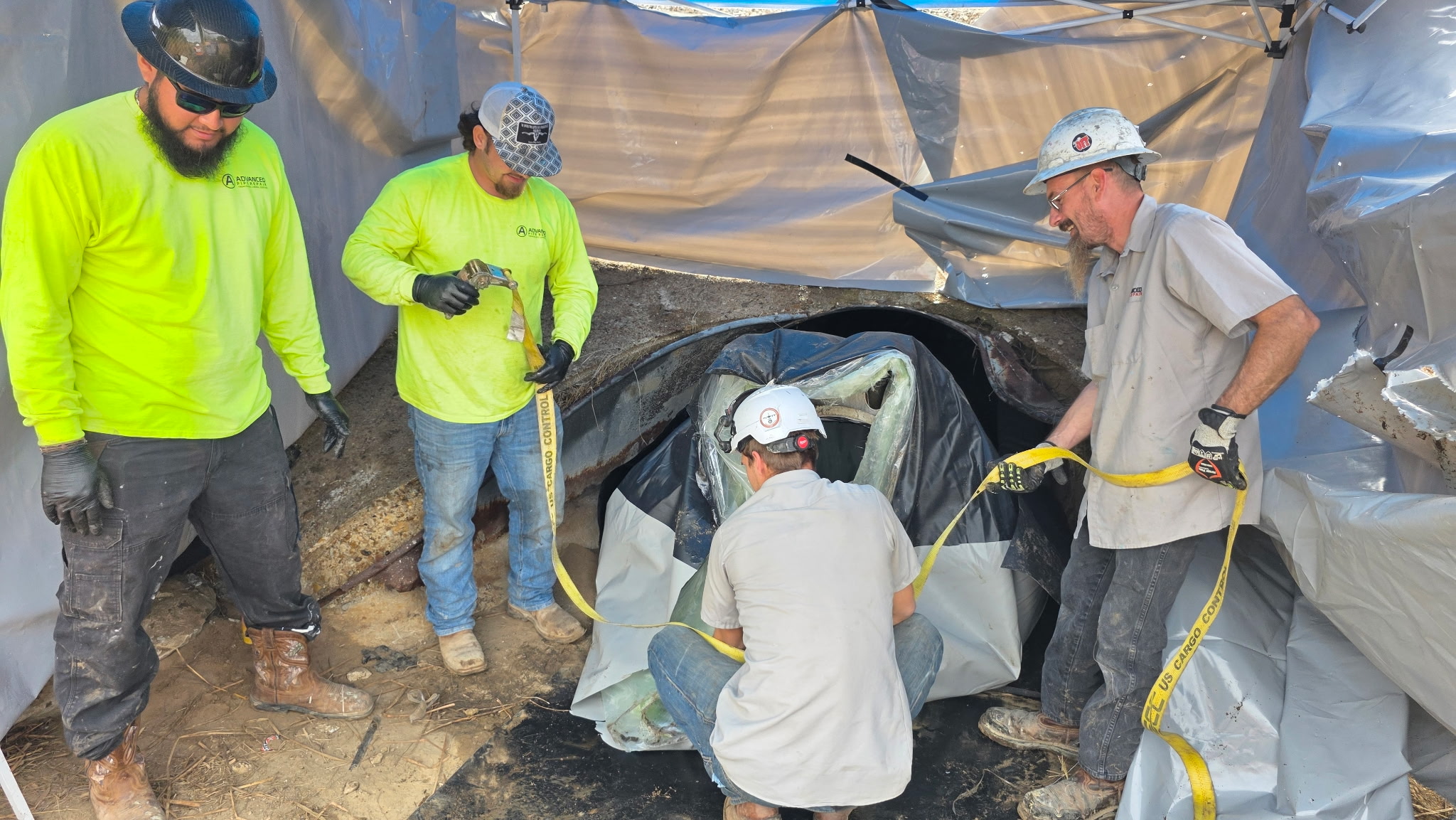
No single rehabilitation technique is appropriate for every pipeline. Pipelines that have experienced complete collapse, severe alignment changes, or extensive structural failure may require excavation and replacement.
Conversely, many aging systems with corrosion, cracking, infiltration, or leaking joints can often be rehabilitated without disturbing surrounding infrastructure. Selecting the appropriate method depends on careful engineering evaluation rather than defaulting to traditional excavation.
Beyond installation itself, owners should also consider future maintenance accessibility, expected service life, hydraulic performance, material compatibility, and regulatory requirements when comparing available rehabilitation options.
Long-Term Performance and Asset Management
For municipalities and large commercial or industrial facilities, rehabilitation decisions should align with broader asset management strategies rather than immediate repair needs alone. Selecting a method with the lowest upfront price may increase future maintenance requirements or shorten the service life of the asset, resulting in higher lifecycle costs.
Engineers often evaluate rehabilitation alternatives based on factors such as:
- Expected design life
- Structural performance
- Resistance to corrosion and chemical exposure
- Hydraulic capacity
- Ease of future maintenance
- Compatibility with existing infrastructure
- Inspection and monitoring requirements
- Total cost of ownership
A lifecycle approach helps owners prioritize solutions that provide reliable long-term performance while minimizing future capital expenditures.
Environmental and Operational Impacts
Construction activities can affect much more than the pipeline itself. Public agencies and facility managers frequently evaluate how rehabilitation methods influence the surrounding environment and daily operations.
Open excavation may require:
- Removal of pavement or concrete
- Tree or landscaping removal
- Temporary road closures
- Equipment staging areas
- Soil hauling and disposal
- Noise and dust mitigation
- Extended traffic management
These impacts can become significant in downtown corridors, hospitals, schools, manufacturing facilities, or campuses where maintaining access is critical.
By limiting excavation to strategic access locations, many rehabilitation methods reduce surface disturbance and allow surrounding infrastructure to remain largely intact throughout construction. For industrial facilities, this can help minimize disruptions to operations and improve overall project coordination.
Regulatory and Design Considerations
Infrastructure rehabilitation projects must also satisfy applicable engineering standards, owner specifications, and regulatory requirements.
Depending on the project, design teams may need to consider:
- Local utility specifications
- Municipal engineering standards
- Environmental permitting
- Flow management requirements
- Structural design calculations
- Material compatibility
- Inspection documentation
- Post-installation testing
Rehabilitation methods should be selected only after confirming they meet the project’s performance requirements and applicable codes. This is especially important for critical infrastructure where reliability and documentation are essential throughout the asset’s service life.
At Advanced Pipe Repair, we work to deliver rehabilitation solutions that address both technical requirements and real-world project constraints. From inspection through installation, we focus on minimizing disruption while providing durable pipe rehabilitation for commercial, industrial, and municipal infrastructure.
Which Pipe Replacement Method Is Better?
There is no universal answer because every project presents a different combination of engineering challenges. The best approach depends on the condition of the existing pipeline, site constraints, operational requirements, and long-term performance goals.
A simple comparison can help illustrate the differences between common rehabilitation approaches:
| Consideration | Trenchless Rehabilitation | Open-Cut Replacement |
|---|---|---|
| Surface disruption | Minimal excavation with limited access points | Extensive excavation and restoration typically required |
| Construction impact | Often reduces traffic, noise, and operational disruptions | May require closures, detours, and larger work areas |
| Best suited for | Structurally sound pipelines requiring renewal or extension of service life | Severely damaged, collapsed, or misaligned pipelines |
| Restoration requirements | Typically lower surface restoration needs | Higher restoration costs for pavement, landscaping, and surrounding areas |
| Long-term considerations | Can provide durable performance while preserving existing infrastructure | Provides a fully new pipeline installation when rehabilitation is not feasible |
Projects involving heavily congested utility corridors, sensitive landscapes, major roadways, or active commercial facilities often benefit from rehabilitation methods that minimize excavation and surface restoration.
Conversely, pipelines with severe structural collapse, significant alignment issues, or extensive damage beyond rehabilitation limits may require complete removal and replacement through excavation.
Questions engineers should ask include:
- What is the structural condition of the existing pipe?
- Can the existing alignment be maintained?
- What restoration costs exist beyond pipe installation?
- How will construction affect traffic or facility operations?
- Are there environmental or permitting constraints?
- What service life is required?
- Which option provides the lowest total lifecycle cost?
Answering these questions early helps project teams develop specifications that reduce uncertainty during construction.
Making an Informed Infrastructure Decision
Successful pipeline rehabilitation depends on balancing cost, constructability, operational impacts, and long-term performance. While initial construction pricing remains important, experienced owners recognize that restoration expenses, schedule impacts, risk exposure, and lifecycle value often have a greater influence on the overall success of a project.
Early investigation, detailed inspections, and careful engineering evaluation provide the information needed to select an appropriate rehabilitation strategy before construction begins. Investing time in project planning can reduce unforeseen conditions, improve budget accuracy, and help ensure the completed system performs as intended for decades.
Final Thoughts
Choosing between trenchless vs open-cut pipe replacement requires more than comparing installation costs. The right solution depends on the existing pipeline condition, project constraints, long-term performance objectives, and the risks associated with construction in the surrounding environment. Evaluating total lifecycle costs, operational impacts, regulatory requirements, and future maintenance needs provides a more complete basis for decision-making than focusing on initial construction costs alone.
At Advanced Pipe Repair, we help municipalities, industrial facilities, commercial property owners, and engineering professionals evaluate rehabilitation options using proven inspection methods and practical technical expertise. Contact us today to discuss your infrastructure challenges and learn which pipe rehabilitation solution is best suited for your project.